

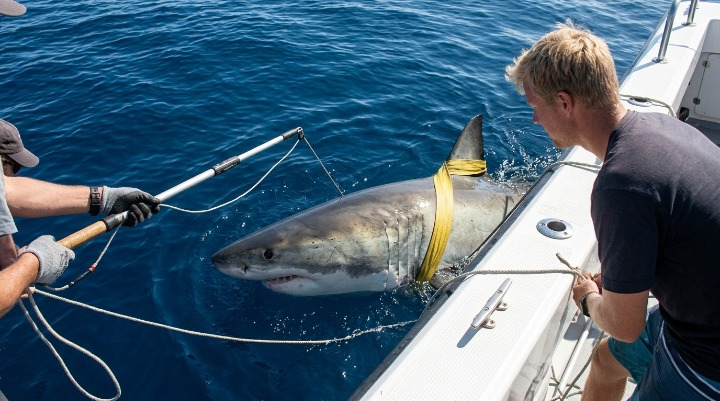
The Atlantic’s largest tagged male great white shark is approaching northern waters, drawing attention from New Jersey beachgoers while researchers say the seasonal migration poses little public risk.
WEBDESK – NJNEWSLINE
Massive Shark Sparks Interest Along the East Coast
Marine researchers are closely monitoring Contender, the largest male great white shark ever tagged in the Atlantic Ocean, as the massive predator continues its seasonal journey along the eastern coastline.
The shark’s latest movements have renewed interest among beachgoers and marine experts, particularly as thousands of people continue visiting New Jersey’s coastline during the busy summer season. Scientists stress, however, that while the shark’s size has captured headlines, there is no reason for unnecessary alarm.
Meet the Atlantic’s Largest Tagged Male Great White
Contender is no ordinary shark.
According to marine conservation organization OCEARCH, the giant predator measures nearly 14 feet (13 feet 9 inches) in length and weighs approximately 1,653 pounds, making him the largest male great white shark ever scientifically tagged in the Atlantic Ocean.
Researchers first tagged Contender off the Florida-Georgia coastline to better understand the migration patterns and behavior of great white sharks across the western North Atlantic.
Latest Tracking Suggests Northward Summer Migration
The shark’s tracking device recently transmitted another location signal after several weeks with limited activity.
Marine experts believe Contender is following the same seasonal migration route observed in previous years, moving toward cooler northern waters where food sources become more abundant during the summer months.
Although exact positions cannot always be confirmed because satellite tags only transmit when the dorsal fin breaks the water’s surface, scientists remain confident about the shark’s general direction of travel.
Why Great White Sharks Move Every Summer
Researchers explain that great white sharks naturally migrate according to water temperature and food availability.
During warmer months, many adults travel north toward regions such as Cape Cod and Atlantic Canada, where seal populations and large fish provide ideal feeding opportunities. As temperatures cool later in the year, they gradually return south toward warmer waters.
This migration pattern has been documented repeatedly through satellite tracking.
New Jersey Residents Should Not Panic
Despite growing attention surrounding Contender’s movements, marine scientists emphasize that beachgoers should remain calm.
Great white sharks spend most of their time well offshore and rarely enter shallow swimming areas where people gather. Human encounters remain extremely uncommon, particularly when normal beach safety guidelines are followed.
Experts say shark sightings often generate public concern because of their size, but actual risks to swimmers remain very low.
Tracking Technology Helps Scientists Understand Sharks
Contender carries a sophisticated satellite tracking device attached to his dorsal fin.
The transmitter records movement whenever the fin remains above the water long enough for satellites to receive a signal. This information helps researchers study migration routes, feeding behaviour and habitat preferences throughout the shark’s lifetime.
The collected data contributes to conservation efforts aimed at protecting marine ecosystems and improving scientific understanding of apex predators.
Beach Season Brings Renewed Public Interest
Every summer, reports involving large sharks naturally attract attention as millions of people visit beaches across the U.S. East Coast.
New Jersey’s coastline welcomes thousands of swimmers, surfers, anglers and boaters each season, making updates about marine wildlife particularly popular. However, officials continue reminding visitors that sharks are an essential part of healthy ocean ecosystems.
Their presence often indicates balanced marine biodiversity rather than increased danger.
Experts Encourage Awareness, Not Fear
Marine biologists say education remains the best response to shark sightings.
Visitors are advised to swim near lifeguards, avoid entering the ocean during low visibility conditions and follow official beach advisories whenever wildlife activity is reported.
Simple precautions dramatically reduce already low risks while allowing people to safely enjoy the coastline.
Conservation Benefits From Public Tracking
OCEARCH has made shark tracking available to the public through its online monitoring platform.
The transparency allows researchers, educators and ocean enthusiasts to follow the movements of tagged sharks while learning more about marine conservation.
Scientists hope public interest generated by sharks like Contender will encourage greater appreciation for ocean ecosystems and the need to protect them.
A Giant Predator Continues Its Atlantic Journey
Contender’s latest movements once again highlight the remarkable journeys undertaken by great white sharks every year.
While his enormous size has made headlines, researchers emphasize that his migration follows natural seasonal behavior rather than unusual activity. As New Jersey’s beaches remain busy throughout the summer, experts continue encouraging visitors to enjoy the ocean responsibly while respecting the wildlife that calls the Atlantic home.
