

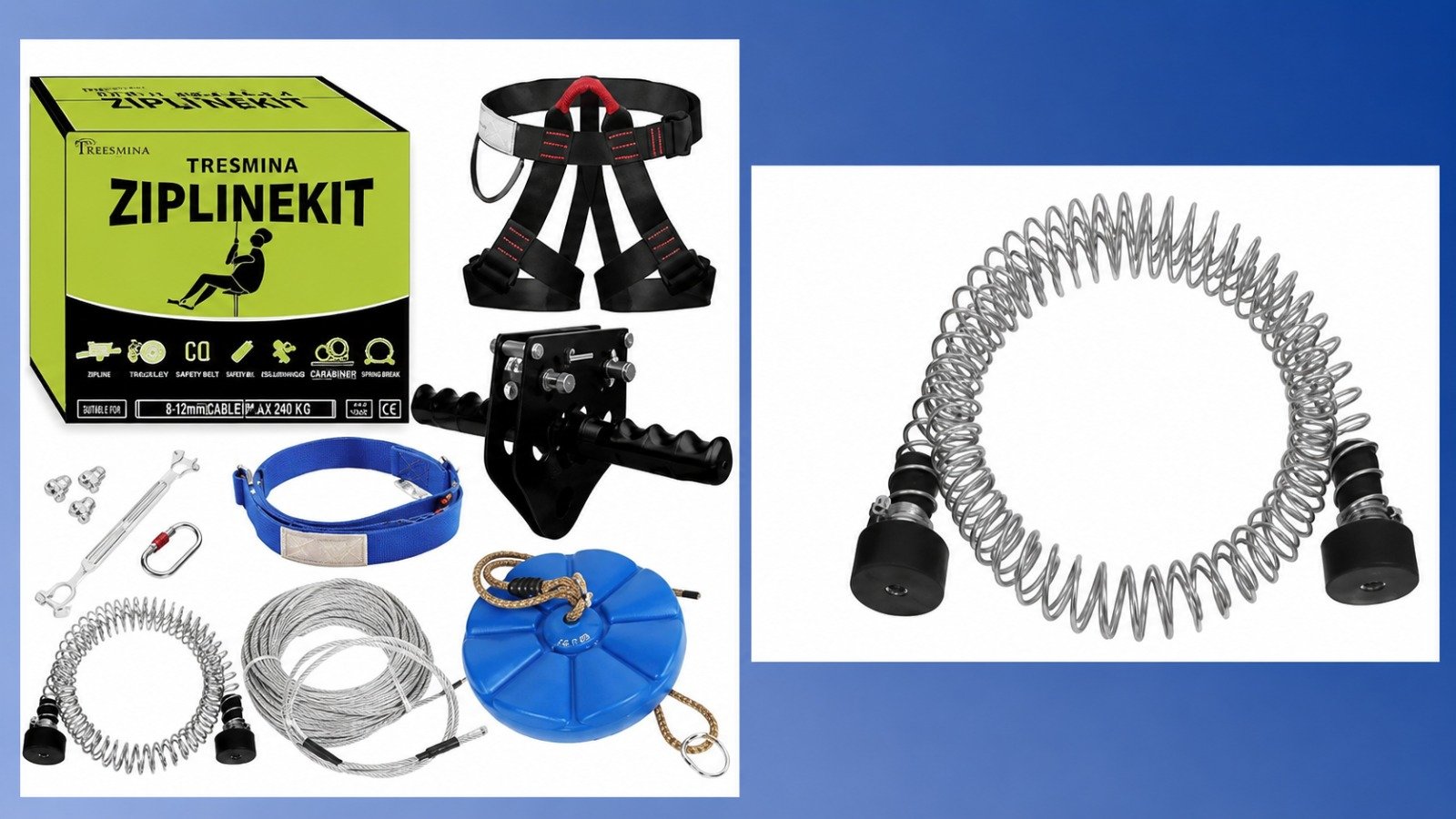
More than 60,000 backyard zipline kits sold on Amazon have been recalled after equipment failures caused falls and collisions, leaving dozens injured and prompting an urgent nationwide safety warning.
WEBDESK – HAJIRA IRFAN – NJNEWSLINE
Backyard Adventure Turns Into a Serious Safety Warning
What should have been a fun backyard adventure has instead become a serious safety concern for families across the United States. Federal regulators have recalled more than 60,000 Amazon-sold backyard zipline kits after reports that critical parts snapped, detached or failed to slow riders, causing people to crash into trees or fall to the ground. The incidents have left multiple children and adults injured, prompting an urgent warning to stop using the products immediately.
The recall covers more than 60,000 TT Trsmima backyard zipline kits and nearly 19,000 stand-alone spring brakes after federal safety officials determined that key components can fail during use, creating a significant risk of falls and collisions.
Equipment Failures Triggered Dozens of Injury Reports
According to the U.S. Consumer Product Safety Commission (CPSC), the manufacturer received 21 reports of the zipline kit’s turnbuckle, cable or seat breaking or detaching while riders were using the equipment.Those failures resulted in at least eight reported injuries, including fractures, sprains, bruises and scratches.
The company also received 19 reports involving the zipline’s spring brake, which allegedly failed to slow riders safely. In several cases, users collided with trees or fell from the zipline, causing at least 12 additional injuries, including fractures, concussions and abrasions.Although no fatalities have been reported, federal regulators said the number of incidents warranted an immediate nationwide recall.
Which Zipline Kits Are Affected?
The recall includes approximately 60,720 TT Trsmima backyard zipline kits and about 19,120 stand-alone spring brakes sold separately.
The products were sold on Amazon between March 2020 and May 2026. Zipline kits retailed for $45 to $285, while the stand-alone spring brakes sold for $14 to $48.
Each kit contains the equipment needed to install a backyard zipline ranging from *76 to 200 feet*, including a steel cable, turnbuckle or ratchet strap, trolley, spring brake, plastic seat, safety harness and installation hardware.
Some trolleys are marked with the “TT TRSMIMA” name in white lettering, while the recalled stand-alone spring brakes have black stoppers on both ends and do not include labels or instructions.
Consumers Told to Stop Using the Products Immediately
The CPSC is urging consumers to stop using both the recalled zipline kits and the stand-alone spring brakes immediately.
Owners of the complete kits should uninstall the zipline, cut the safety belt, seat rope and, where applicable, the ratchet strap in half, then discard the remaining components, including the cable, spring brake, turnbuckle and trolley.
Consumers who purchased only the spring brake are also advised to dispose of the product immediately rather than continue using it.
How to Receive a Refund
To obtain a refund, consumers must photograph the destroyed and discarded components and submit the images to the manufacturer as instructed in the official recall notice. Refunds will be processed after the company verifies the submitted photos. Safety officials recommend following the recall instructions carefully and avoiding any attempt to repair or reuse the affected equipment.
A Recall Families Shouldn’t Ignore
The nationwide recall is a reminder that outdoor play equipment can become dangerous when critical safety components fail. Products designed to create fun family experiences can quickly turn hazardous if they malfunction.
With more than 79,000 recalled products, 40 reported incidents and 20 confirmed injuries, federal officials are urging consumers not to ignore the warning. Anyone who owns one of the affected TT Trsmima zipline kits or spring brakes should stop using the equipment immediately and complete the recall process as soon as possible to help prevent another potentially serious accident.
