

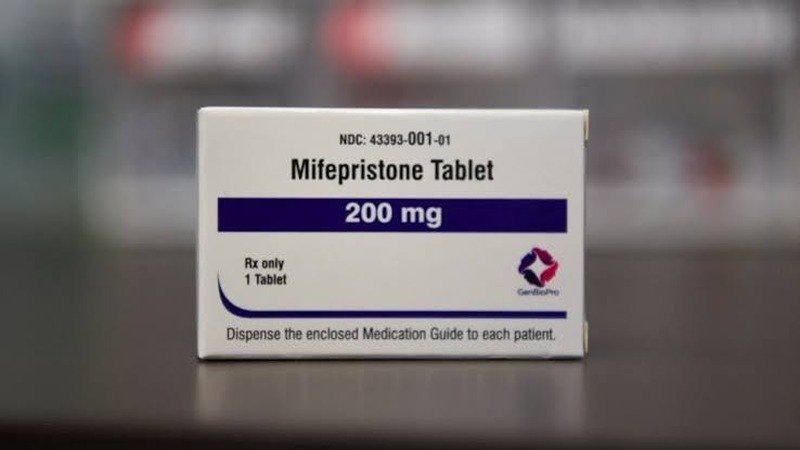
Major anti-abortion groups are urging Attorney General Todd Blanche to reconsider federal authority under the Comstock Act, potentially affecting access to mailed abortion medications nationwide.
WEBDESK – HAJIRA IRFAN – NJNEWSLINE
A renewed fight over abortion access is reaching the U.S. mail system, as major anti-abortion organizations urge Attorney General Todd Blanche to revive a long-dormant federal law that could restrict the delivery of abortion medications and related medical supplies.
Groups Ask Blanche to Reconsider Comstock Act
Advancing American Freedom, a conservative advocacy organization founded by former Vice President Mike Pence, sent an Aug. 7 letter to Blanche asking the Justice Department to review its interpretation of the Comstock Act.
The letter was also signed by major anti-abortion organizations, including Susan B. Anthony Pro-Life America, Americans United for Life and Students for Life of America. Nearly 30 additional organizations and groups also endorsed the request.
At the center of their argument is the Comstock Act, a federal law enacted in 1873 that prohibits mailing certain materials considered obscene, including items described as being intended for producing an abortion.
The groups argue that the law should be applied more broadly to abortion-related medications and supplies.
Why the 150-Year-Old Law Matters Again
The Comstock Act has remained on the books for more than a century but has not been broadly enforced for decades. That has earned it the description of a “zombie law” ,an old statute that remains legally intact despite long periods of limited enforcement.
During the Biden administration, the Justice Department’s Office of Legal Counsel issued a 2022 opinion concluding that the law did not prohibit mailing certain abortion medications when the sender did not intend for the recipient to use them unlawfully.
The organizations challenging that interpretation say it effectively weakens the law because a sender’s intentions and a recipient’s eventual use of medication can be difficult to determine.
The groups told Blanche they welcomed his commitment to reviewing the earlier Justice Department opinion.
Abortion Pills Have Become a Major Access Point
The dispute comes as medication abortion has become an increasingly important part of abortion care in the United States.
Following the Supreme Court’s 2022 Dobbs v. Jackson Women’s Health Organization decision, states gained broader authority to regulate abortion. More than a dozen states subsequently adopted near-total abortion bans.
The FDA later changed its rules for mifepristone, one of the two medications commonly used in medication abortion. The changes made it possible for the drug to be dispensed without an in-person provider visit, making telehealth and mailed prescriptions more accessible.
Mifepristone works by stopping the pregnancy, while misoprostol is used to help empty the uterus.
According to the Society of Family Planning’s #WeCount report, telehealth accounted for 27% of abortions during the first six months of 2025, representing more than 162,000 cases.
Legal Fight Could Extend Beyond One Drug
The dispute is not limited to mifepristone. Anti-abortion groups and Republican state attorneys general have previously challenged the FDA’s rules and sought greater authority to enforce the Comstock Act.
A Texas judge ruled in 2023 that the law could be enforced in this context, but the Supreme Court later overturned that ruling.
Abortion-rights advocates have warned that a broader application of Comstock could affect more than abortion pills. They argue that mailing restrictions could potentially reach medical equipment and supplies used in abortion care, miscarriage treatment and other pregnancy-related complications.
If access to mifepristone were restricted, advocates have said providers could continue using misoprostol on its own, although the legal environment surrounding its delivery could also become more complicated.
A Decision With Far-Reaching Consequences
Americans United for Life spokesperson Gavin Oxley argued that the law should cover drugs and instruments mailed with the intention of facilitating an abortion, including supplies associated with misoprostol-only abortions.
For abortion-rights advocates, however, the stakes are much broader than a single medication. They warn that enforcing a 150-year-old mailing law could reshape how reproductive healthcare is delivered across state lines.
Blanche’s review could therefore become an important test of how far federal authorities are willing to go in using the Comstock Act. What began as a dispute over the mailing of abortion pills could ultimately determine how easily patients and medical providers can access a much wider range of reproductive healthcare supplies.
