

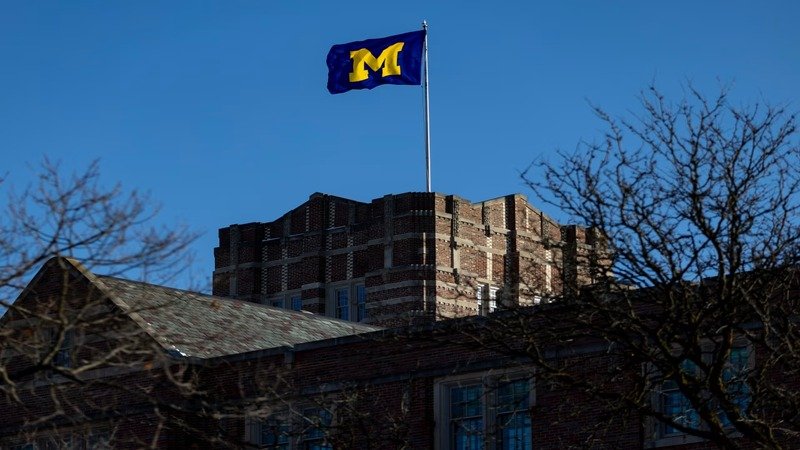
The University of Michigan’s largest college will hide first-semester grades from official transcripts for incoming freshmen starting in fall 2027, aiming to reduce academic pressure and support student mental health.
WEBDESK – HAJIRA IRFAN – NJNEWSLINE
A First Semester Without GPA Pressure
What if your first semester of college came with grades, but those grades couldn’t hurt your GPA? That will soon become a reality for thousands of University of Michigan freshmen as one of the university’s largest colleges prepares to move away from traditional transcript grading, citing the growing pressure and mental health challenges facing college students.
Starting in fall 2027, students entering the College of Literature, Science and the Arts (LSA) will still receive grades and feedback from professors, but those grades will not appear on their external transcripts or count toward their GPAs during their first semester.
What Is Changing?
The new pilot program, officially called “Grade Covering,” is designed to give first-year students time to adjust to the demands of college without worrying that a difficult first semester could immediately affect their academic records.
Students will continue receiving grades and feedback in every course. The difference is that their final first-semester grades will be kept off their external transcripts and excluded from their GPAs.
The university says the initiative is part of its broader Student Success Initiative, which identifies establishing strong early momentum as an important factor in student success.
LSA also believes that reducing the consequences attached to first-semester grades could help address the mental health challenges affecting college-aged students.
Why Is the University Making the Change?
According to the university, the program is intended to give students room to acclimate to college-level demands and pursue subjects based on genuine academic interest rather than fear of damaging their GPAs.
The college also hopes the approach will encourage students to explore unfamiliar areas of study without worrying that one disappointing grade could affect their academic future.
The broader goal is to create a culture centered more on connection and collaboration than competition.
Rather than entering college focused entirely on protecting a GPA, students would have an opportunity to discover their interests, adjust to university life and develop effective academic habits during their first semester.
Grades Return in the Second Semester
The policy does not mean University of Michigan students will stop receiving traditional grades.
Beginning with their second semester, LSA students will have their grades recorded on their transcripts and included in their GPAs, with the system continuing for the remainder of their undergraduate studies.
The university will also retain internal records of students’ first-semester grades. Those records can be used for academic advising, potential scholarships and awards, majors outside LSA and compliance requirements.
So while the grades will not be visible on students’ external transcripts during that initial semester, the university will still have access to their academic performance.
Thousands of Students Could Be Affected
The College of Literature, Science and the Arts is the largest of the University of Michigan’s 19 colleges and schools.
According to MLive, nearly 19,000 undergraduates are enrolled in LSA, including approximately 3,715 first-year students.
The pilot therefore has the potential to affect thousands of students as the university tests whether temporarily removing grades from official records can help freshmen make a smoother transition into college.
Other Colleges Have Alternative Grading Systems
Michigan is not the only prominent college experimenting with alternatives to conventional grading.
Brown University uses a grading structure that differs from the traditional A-through-F model. Sarah Lawrence College combines conventional grades with written evaluations from professors, while Hampshire College has emphasized individualized academic programs and constructive faculty feedback.
These approaches reflect a continuing discussion in higher education about how colleges should evaluate students while also supporting learning and student well-being.
What Happens Next?
For incoming LSA freshmen, the change could mean entering college with one less source of pressure hanging over their heads. Instead of worrying that a single difficult class could permanently affect their academic record, students will have their first semester to adjust, experiment and find their footing.
But the bigger question will be whether removing grades from the transcript actually reduces academic stress, or simply changes how students experience it.
University of Michigan’s experiment will provide a closely watched test of whether colleges can protect students’ well-being while still maintaining academic accountability. For the Class of 2031, the first semester may no longer be about protecting a GPA, it may be about finding the confidence to learn.
