

Reported by: Hajira Irfan
New Jersey’s Data Center Fight Moves to Court
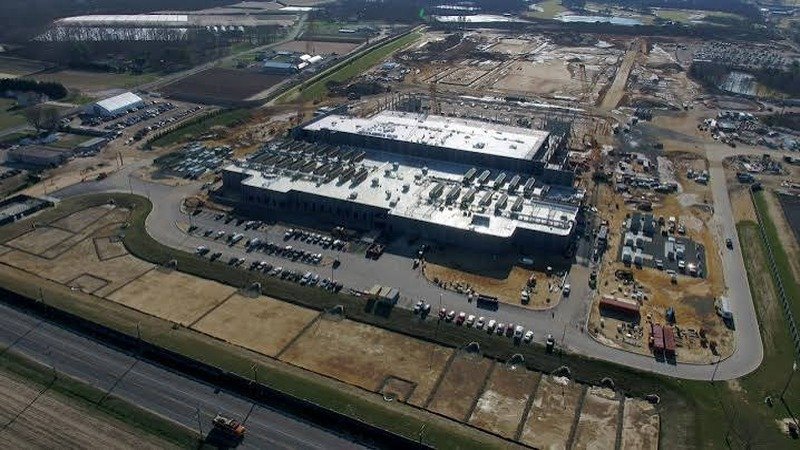
New Jersey’s increasingly heated debate over data centers has moved from crowded town meetings into courtrooms, as developers challenge local bans on the facilities.
At least three municipalities, Montgomery, Andover Township and Monroe Township, have recently faced lawsuits from developers seeking to overturn restrictions on data centers. The companies argue that local officials acted improperly and allowed public pressure to influence land use decisions.
Developers Take Towns to Court
In Monroe Township, Gloucester County, Princeton based Hexa Builders is seeking $300 million in damages over plans for a roughly 1 million square foot data center and warehouse.
The company argues that township officials improperly reversed an earlier ordinance that had allowed data centers. Its lawsuit also claims the ban violates New Jersey’s Municipal Land Use Law and raises First Amendment concerns. The case is now pending in federal court.
Montgomery faces a separate lawsuit from E. Khan Development, which owns the 257 acre former Kenvue campus in Skillman. The developer says its site plan application had already been declared complete before the township adopted an ordinance banning data centers.
The company is asking a judge to invalidate the ordinance and is seeking $300 million in damages.
In Andover Township, National Land Developers LLC has also sued over a local ban. The company wants to develop a data center on a roughly 100 acre former airport property.
The lawsuit follows a sharp reversal by township officials. They initially considered new standards for data centers but later moved toward a townshipwide ban after a contentious public meeting.
Why Residents Are Pushing Back
The lawsuits come as opposition to data centers continues to spread across New Jersey.
Nearly three dozen municipalities have adopted bans or restrictions, according to the source report. Residents have raised concerns about the facilities’ electricity demand, water consumption, noise and impact on surrounding communities.
For many opponents, the issue goes beyond a single development. They want residents to have a meaningful voice before large industrial facilities are approved in their towns.
Developers and supporters, however, argue that data centers are becoming increasingly important to artificial intelligence, cloud computing and digital services.
That leaves state and local officials facing a difficult balancing act: encouraging new technology while addressing concerns about infrastructure and quality of life.
The Debate Is Reaching Trenton
The court battles are unfolding alongside a broader discussion in New Jersey over how the rapidly growing data center industry should be regulated.
Gov. Mikie Sherrill has backed policies aimed at placing additional limits on data center development and addressing concerns involving energy, water and community impacts.
Other states are also taking action.
New York Gov. Kathy Hochul recently signed an order creating a one year moratorium on new hyperscale data centers while the state works on a broader regulatory framework.
Pennsylvania Gov. Josh Shapiro has also introduced tougher requirements for data center projects, although Pennsylvania has stopped short of a statewide construction ban.
What Comes Next
For New Jersey, the lawsuits could ultimately become about more than individual projects. They may help determine how much authority municipalities have to change zoning rules and block developments that companies say should be allowed.
Meanwhile, opposition is showing little sign of disappearing. Residents remain concerned about the demands these facilities could place on local water supplies, electricity networks and surrounding neighborhoods.
As more municipalities consider restrictions and developers continue challenging them in court, New Jersey is approaching a critical moment in its data center debate.
The question is no longer simply whether New Jersey will build more data centers. It is who gets to decide where they are built, and how much say local communities will have when the answer is “not here.”
