

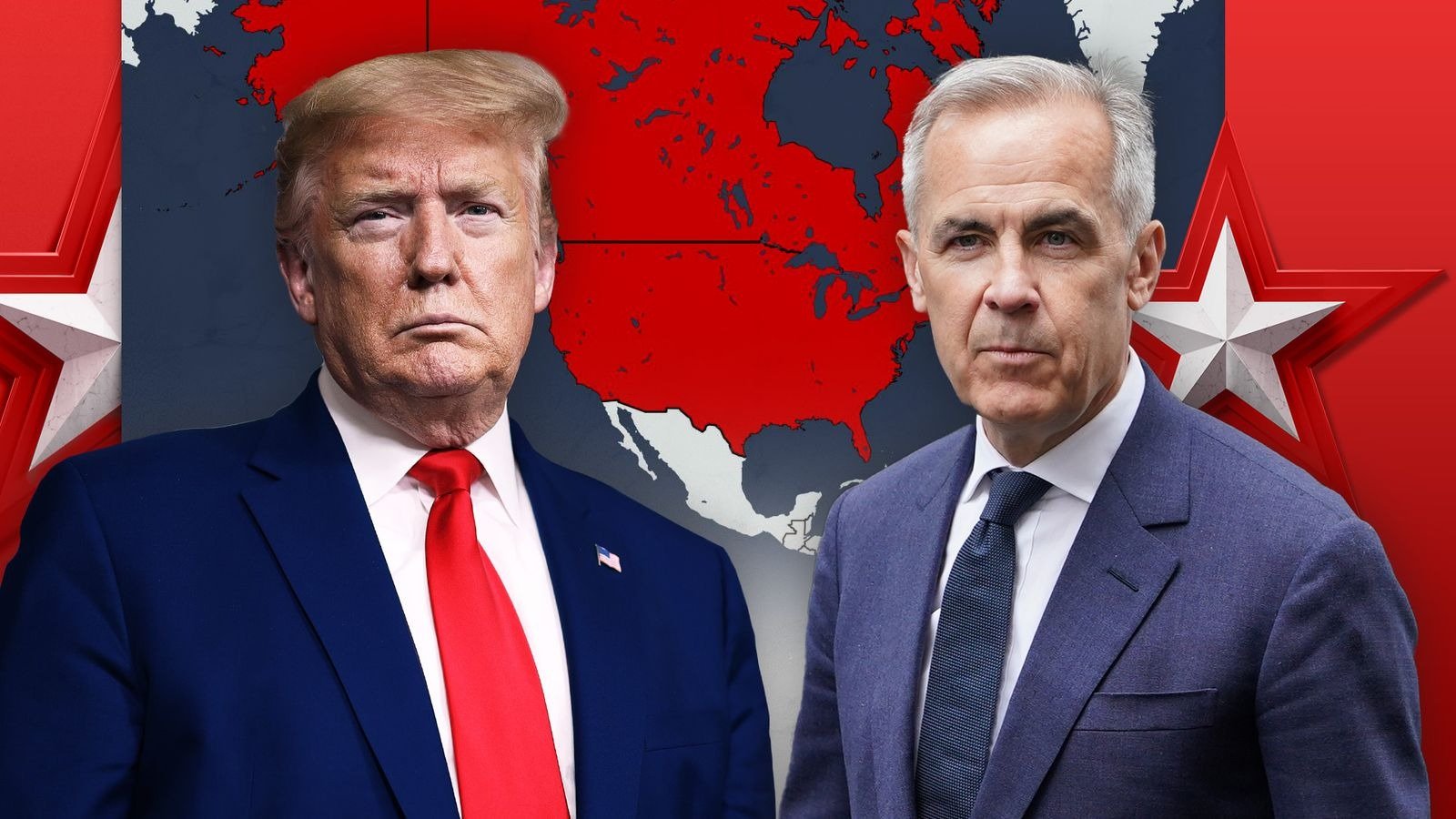
Canada’s Mark Carney has backed deeper ties with the European Union, including a proposed associate membership, as trade tensions with President Donald Trump reshape Ottawa’s economic strategy.
Canadian Prime Minister Mark Carney has embraced the idea of creating a new, closer relationship between Canada and the European Union, hours after U.S. President Donald Trump warned that allowing Canada to become an EU associate member could be considered a “hostile act.”
Speaking to the European Parliament in Strasbourg on Thursday, Carney welcomed European Commission President Ursula von der Leyen’s proposal for Canada to become the bloc’s first associate member. He said Canada and Europe should build a deeper strategic partnership covering trade, defence, energy, technology, critical minerals and financial services.
Carney did not frame the proposal as an attempt to create a rival bloc. Instead, he argued that closer cooperation would strengthen Canada’s resilience and ability to protect its economic and political sovereignty.
“We do not seek power to dominate others,” Carney said, arguing that Canada was pursuing resilience so that no country could control its markets, undermine its sovereignty or threaten its democratic institutions.
A major shift in Canada’s economic strategy
The proposed arrangement comes as relations between Canada and the United States have become increasingly strained. The U.S. remains by far Canada’s largest trading partner, with roughly 70% of Canadian exports going to the United States, making the diversification of trade an important part of Ottawa’s current strategy.
Carney outlined a broad agenda for Canada-EU cooperation, including critical minerals, defence manufacturing, artificial intelligence, energy security, space technology and payment systems.
He also proposed expanding people-to-people links, including greater opportunities for young Canadians and Europeans to live, work and study on either side of the Atlantic. Canada could also participate in EU education and research programs such as Erasmus+ and the next generation of Horizon, according to his speech.
Canada has already joined the EU’s SAFE defence procurement initiative as its first non-European member, while Ottawa and Brussels have been working to deepen cooperation under their existing strategic partnership and the Canada-EU Comprehensive Economic and Trade Agreement.
Trump warns of consequences
Trump has responded sharply to the proposed closer Canada-EU relationship. He said Wednesday that Canadian associate membership in the EU could be a “hostile act” and warned that Washington could respond with tariffs and restrictions on trade with Europe.
The disagreement highlights the competing economic pressures facing Canada as it seeks to maintain its relationship with the United States while expanding trade and strategic partnerships elsewhere.
For the EU, the proposal would create a new form of relationship with a major non-European democracy. The details of any associate membership have yet to be finalized, with Canada and the EU expected to continue discussions on the framework.
Carney said the objective was not complete self-sufficiency but collective resilience, arguing that Canada and Europe could combine their different economic and strategic strengths.
The proposed relationship therefore remains at the discussion stage, but Thursday’s speech marked a clear expression of Ottawa’s interest in moving beyond conventional Canada-EU trade ties toward a broader strategic partnership.
