

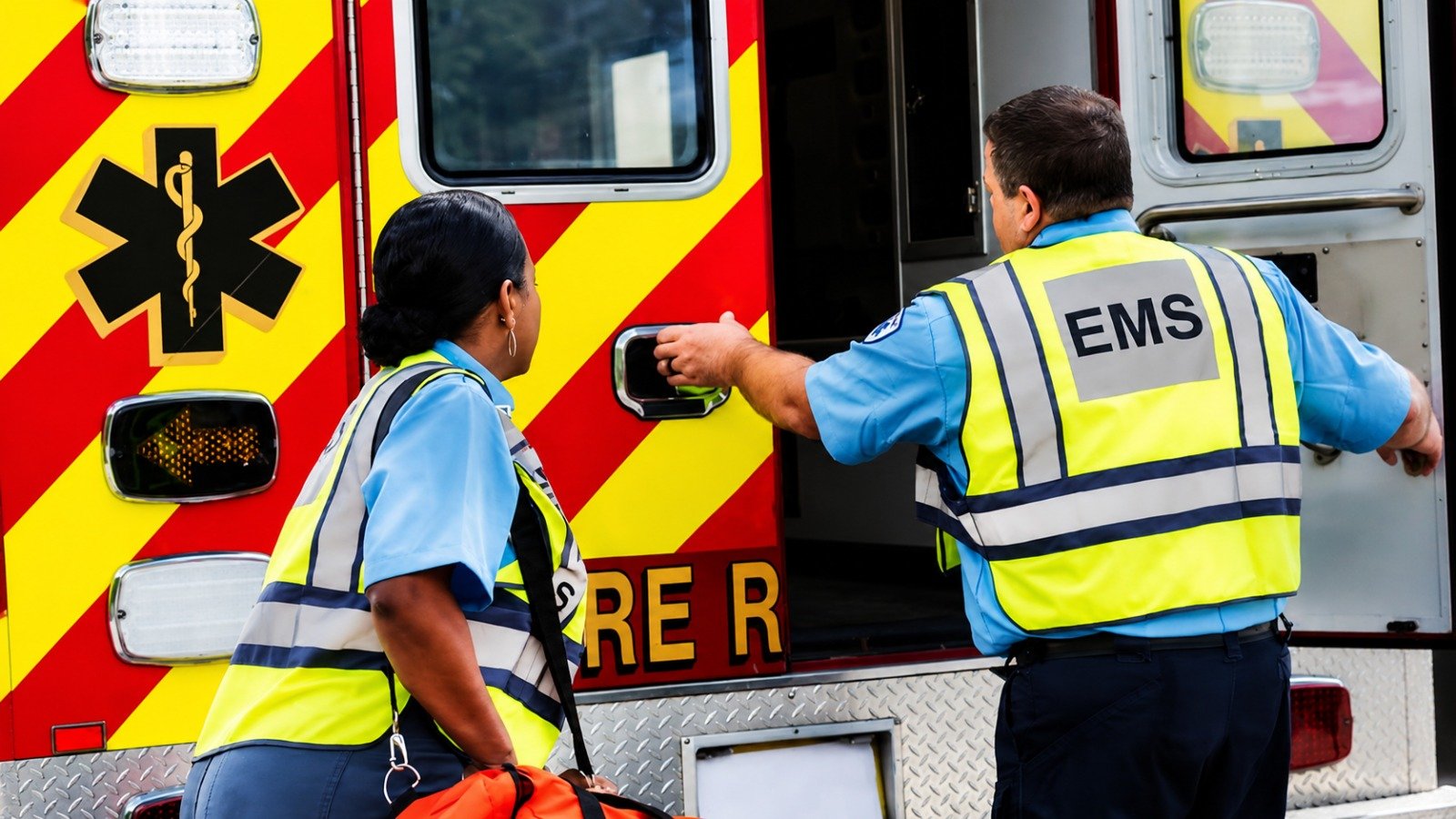
New Jersey’s latest EMS data shows ambulance response times exceed the state’s 15-minute goal in nine counties, with Warren County recording the longest average wait at 22 minutes.
WEBDESK – HAJIRA IRFAN – NJNEWSLINE
When You Need Help Most, Every Minute Feels Like Forever
No one expects to call 911. But when a loved one suffers a heart attack, a serious crash, or another life-threatening emergency, every second suddenly matters. In those moments, people trust that help is already on the way.
Newly released data from the New Jersey Department of Health shows that for many residents, that wait is taking longer than the state recommends, raising fresh concerns about emergency medical response across New Jersey.
Nine Counties Are Missing the State’s 15-Minute Goal
State Emergency Medical Services (EMS) data covering June 2025 through June 2026 shows that at least nine counties recorded average ambulance response times above New Jersey’s recommended 15-minute benchmark.
‘The figures measure the average time it takes EMS crews to reach patients after being dispatched. While many communities remain close to the goal, others continue to experience noticeably longer waits.
Warren County Has the Slowest Response Time
Among New Jersey’s 21 counties, Warren County recorded the state’s longest average EMS response time at 22 minutes about *seven minutes longer than the recommended target.
The Department of Health collects the information from licensed EMS agencies across the state, processing data from more than 1.5 million emergency incidents each year to monitor ambulance performance.
How Your County Compares
The latest figures reveal clear differences in response times depending on where people live.
Atlantic and Camden counties recorded the fastest average response time at 12 minutes, followed by Cape May, Essex, Hudson and Union at 13 minutes. Gloucester and Mercer also remained below the state’s benchmark.
On the other end of the list, Sussex County averaged 20 minutes, while Warren County ranked last at 22 minutes. Hunterdon, Salem, Somerset, Monmouth and Passaic also recorded response times above the state’s recommended target, highlighting regional differences in emergency medical coverage.
What’s Behind the Delays?
The state data does not identify one specific reason for the longer response times, but several factors can slow emergency crews.
Long travel distances in rural areas, heavy traffic, severe weather, staffing shortages, high call volumes, and limited ambulance availability can all increase response times. In some cases, EMS crews may already be responding to another emergency before they can head to a new 911 call.
Why These Minutes Matter
For patients suffering a heart attack, stroke, severe injuries, or other life-threatening emergencies, quick medical care can make a significant difference. That’s why New Jersey uses a 15-minute average response-time benchmark to evaluate EMS performance and identify areas that may need additional resources.
The latest data shows that emergency response times vary across New Jersey, meaning where someone lives can affect how quickly an ambulance reaches them. While many counties meet or come close to the state’s recommended response-time goal, others continue to face longer waits, highlighting differences in emergency medical coverage across the state.
Behind Every Number Is a Family Waiting for Help
Response-time reports are more than statistics—they represent people facing some of the most frightening moments of their lives. Every delayed ambulance means a patient and family waiting, hoping help arrives before precious minutes slip away.
As New Jersey continues working to strengthen its emergency medical system, the newest county-by-county data serves as a reminder that improving response times isn’t just about meeting a benchmark. It’s about ensuring that when someone dials 911, lifesaving care reaches them as quickly as possible, because in an emergency, every minute can make the difference.
