

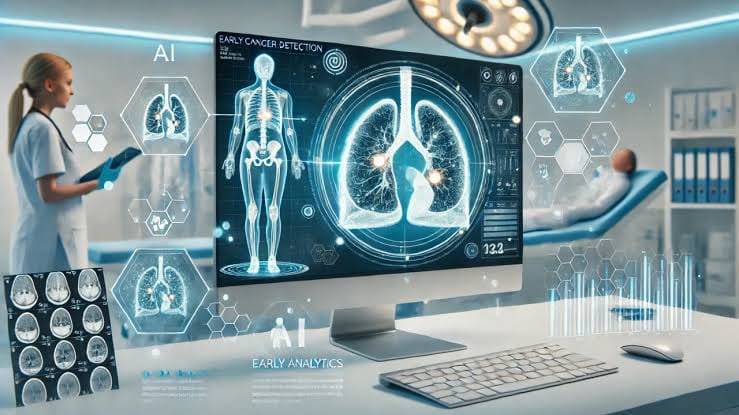
Artificial intelligence and advanced CT scans are helping doctors detect lung cancer earlier across the tri-state, giving more high-risk residents faster diagnosis and better treatment opportunities.
WEBDESK – HAJIRA IRFAN – NJNEWSLINE
AI Is Giving Doctors a New Edge Against the Tri-State’s Deadliest Cancer
Doctors across the tri-state region are using artificial intelligence alongside low-dose CT scans to detect lung cancer earlier, a step they say could improve treatment outcomes for high-risk patients, including many in New Jersey. As healthcare providers adopt new technology, they hope more eligible people will take advantage of screening before symptoms appear, when treatment is often most effective.
Lung cancer remains the leading cause of cancer-related deaths in the United States, largely because it is frequently diagnosed at a later stage. For doctors, the focus is clear: diagnose the disease before symptoms develop, giving patients the best possible chance of successful treatment and recovery.
Why Lung Cancer Is So Difficult to Catch
Lung cancer often develops silently, with many patients experiencing no obvious warning signs until the disease has already progressed. By the time symptoms such as a persistent cough, chest pain or breathing difficulties appear, treatment can become more challenging.
That is why physicians continue to recommend lung cancer screening for people at higher risk, particularly current and former smokers. Yet doctors interviewed by News 12 say only about 20% of eligible people currently undergo screening, leaving many others without the opportunity for early diagnosis.
Health experts believe improving awareness is just as important as improving technology, since many eligible people still do not realize screening could benefit them.
The One-Minute Test Doctors Want More People to Know About
One of the most effective tools available today is the low-dose CT (LDCT) scan, which takes less than a minute to complete.
Despite its speed, the scan can detect tiny lung nodules before they begin causing symptoms. Finding these abnormalities early allows doctors to investigate further and, when necessary, begin treatment before the disease spreads.
Specialists say this quick test has become one of the biggest advances in early detection and is helping shift the focus from treating advanced cancer to finding it sooner.
AI Is Becoming a Valuable Assistant for Doctors
AI is becoming a valuable assistant during lung cancer screening, helping radiologists review scans more efficiently while keeping medical decisions firmly in the hands of experienced physicians.
The software analyzes CT scans and flags areas that deserve a closer look, allowing radiologists to focus on findings that could otherwise be easy to miss. Doctors then use their expertise and clinical judgment to decide whether further testing or treatment is needed.
By combining AI with the experience of radiologists, healthcare teams hope to identify suspicious findings earlier while making the screening process more efficient.
Breaking Down Barriers to Screening
Getting screened is not always easy for people who face an increased risk of lung cancer but do not qualify for insurance-covered scans.
To help address that gap, the RadNet imaging network has introduced a $165 self-pay lung cancer screening option. The program is intended for groups such as firefighters, military veterans and people with significant exposure to secondhand smoke who may still benefit from screening.
Doctors believe programs like this could encourage more people to get screened instead of delaying a test that could detect cancer at an earlier stage.
The Earlier It’s Found, the Better the Chances
Medical experts continue to encourage anyone with a history of smoking or long-term exposure to harmful substances to speak with their healthcare provider about whether lung cancer screening is appropriate.
Because the disease often develops quietly, waiting until symptoms appear can reduce treatment options. Detecting lung cancer early gives patients a greater opportunity to begin treatment before it becomes more difficult to manage.
A Small Step Today Could Save Lives Tomorrow
Artificial intelligence is not replacing doctors, but it is giving them another powerful tool in the fight against one of the nation’s deadliest diseases. Combined with faster imaging, early detection and broader access to screening, these advances are helping reshape how lung cancer is diagnosed across the tri-state.
Doctors hope growing awareness of AI-assisted screening will encourage more eligible New Jersey residents to get tested. They say the technology cannot prevent lung cancer, but finding the disease early can significantly improve a patient’s chances of successful treatment.
