

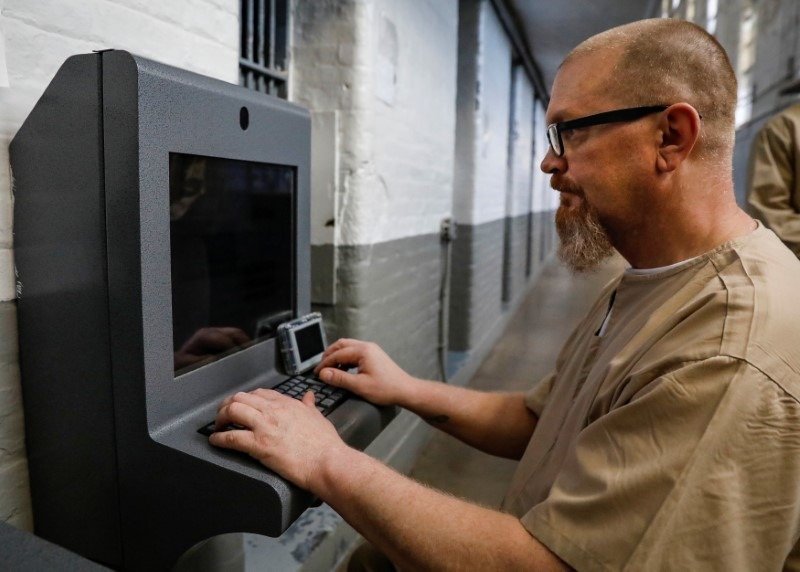
A New Jersey inmate has filed a federal lawsuit challenging the state’s prison tablet switch, arguing prisoners could lose purchased devices, digital content, and valuable personal records without compensation.
WEBDESK – SAMAN NOOR – NJNEWSLINE
New Jersey Prison Tablet Change Triggers Federal Lawsuit
A technology upgrade across New Jersey’s prison system has turned into a legal battle after an inmate challenged the state’s decision to replace thousands of electronic tablets that prisoners purchased over the past decade.
Alonzo Hill, who has been incarcerated at New Jersey State Prison in Trenton since 1990, filed a federal civil rights lawsuit seeking to stop the New Jersey Department of Corrections from requiring inmates to give up their JPay tablets. He argues that prisoners should either be allowed to keep the devices they paid for or be compensated for any property or digital purchases they lose during the transition.
Hill claims the policy violates constitutional protections by taking away personal property without due process.
Why the Tablet Switch Matters
For years, JPay tablets have allowed inmates to stay in touch with loved ones through electronic messages, listen to music, store family photos, and access educational materials. Prisoners also spent their own money purchasing songs, photos, and other digital content, believing those purchases would remain available throughout their sentences.
The Department of Corrections is now replacing JPay with ViaPath Technologies, which provides tablets free of charge but operates under a subscription-based system. Instead of owning digital content outright, users may have to continue paying for access to certain services, while also following new rules governing tablet use and possible damage fees.
For many inmates, the devices have become one of the few reliable ways to communicate with family members and keep personal memories and important records in one place.
Concerns Over Cost and Lost Digital Content
A key issue in the lawsuit is whether everything stored on the existing tablets will successfully transfer to the new platform.
Hill says inmates were led to believe the tablets and purchased content belonged to them as long as they followed prison rules. He argues that forcing prisoners to surrender those devices without meaningful input or compensation is unfair.
The lawsuit also highlights concerns that years of downloaded photos, emails, music, legal documents, and prison grievance records could be difficult—or impossible—to recover if the transfer is incomplete.
Hill further argues that the new subscription model could place an added financial burden on inmates, many of whom earn less than $2 a day through prison jobs. Department of Corrections data previously obtained by the New Jersey Monitor showed inmates spent between $1.5 million and $3.2 million each year on JPay services over the past decade, illustrating how much money has already been invested in the platform.
State Says Content Will Be Transferred
The Department of Corrections declined to comment on the pending lawsuit but said it has reached an agreement with JPay and ViaPath to transfer digital assets, including emails, music, photographs, and attachments, to the new system.
Officials said eight of New Jersey’s nine adult prisons have already completed the transition, with about 9,500 inmates now using ViaPath tablets. New Jersey State Prison is expected to make the switch during the week of August 10 after the state extended its JPay contract for 90 days.
The department says ViaPath was selected because it offers a newer communications system at a lower overall cost for services such as phone calls, electronic messaging, money transfers, and video visits.
Court to Decide What Happens Next
Hill is asking the court to let inmates keep their purchased tablets, require the state to transfer all eligible digital content to the new devices, or compensate prisoners for anything that cannot be preserved. He is also seeking damages from the defendants named in the lawsuit.
The case will now move through federal court, where a judge will decide whether New Jersey can continue its tablet rollout as planned or whether additional protections for inmates’ purchased digital property are required before the transition is completed.
