

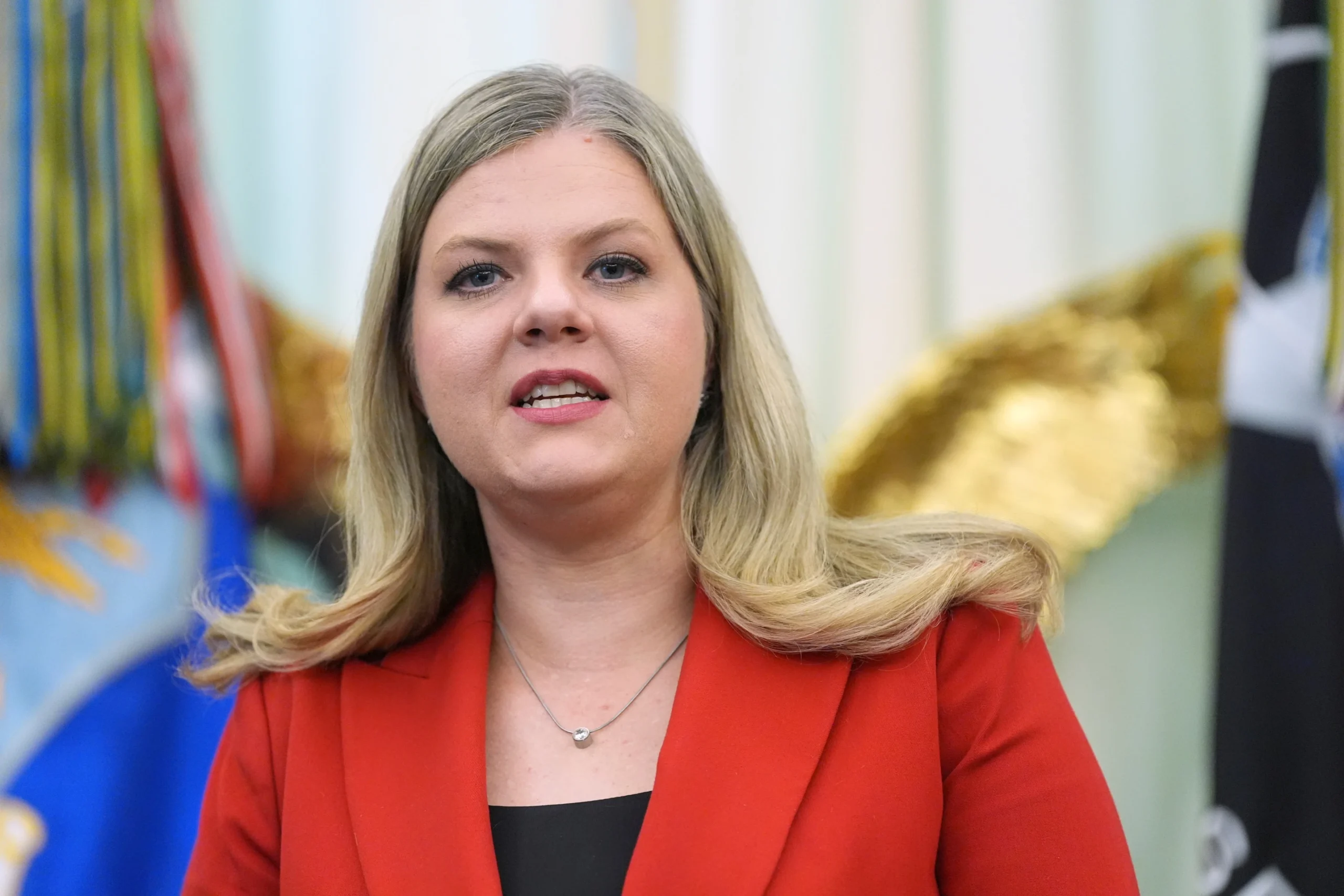
President Donald Trump has nominated Dr. Heidi Overton, a senior White House health policy official, to lead the Food and Drug Administration, putting a prominent ally in charge of an agency facing battles over drug prices, vaccines, abortion medication and regulation.
WEBDESK – NJNEWSLINE – AP
Trump announced the nomination Wednesday on Truth Social, describing Overton as a “rockstar” and saying she would help advance his administration’s health priorities, including faster drug approvals, medical innovation and lower prescription costs.
Overton currently serves as deputy director of the White House Domestic Policy Council, where she has become a visible advocate for Trump’s health agenda during his second term. She has appeared with the president at major health policy events, including announcements involving vaccine policy and the administration’s efforts to negotiate lower drug prices.
If confirmed, Overton would succeed Dr. Marty Makary, who resigned as FDA commissioner in May after a turbulent tenure marked by disagreements with the pharmaceutical industry, agency officials and public health advocates.
Who is Heidi Overton?
Overton holds a medical degree from the University of New Mexico and a doctorate in clinical investigation from Johns Hopkins University. Before joining the Trump administration, she served as chief policy officer at the conservative America First Policy Institute.
Trump said Overton would focus on delivering “faster cures,” encouraging innovation, lowering drug prices and advancing Health Secretary Robert F. Kennedy Jr.’s “Make America Healthy Again” agenda.
Her nomination, however, is likely to face scrutiny in the Senate.
Republicans hold a narrow majority, meaning relatively few defections could threaten her confirmation. The nomination will also go before the Senate health committee, chaired by Louisiana Sen. Bill Cassidy, a physician who has publicly criticized Trump administration actions that he believes could undermine confidence in vaccines.
Vaccine and abortion controversies
Overton’s positions could become central to her confirmation hearings.
She appeared with Trump during an Oval Office event in which the president promoted a disputed claim linking the timing of vaccines to rising autism rates. The claim conflicts with extensive scientific research and the established medical consensus that vaccines do not cause autism.
Overton did not publicly challenge Trump’s remarks at the event.
She has also expressed opposition to abortion pills. That position could raise questions about whether the FDA would reconsider policies that have expanded access to medication abortion, including prescriptions provided through telehealth and online services.
Anti-abortion groups have pressed the Trump administration to take stronger action against expanded access to abortion medication. Overton’s nomination could therefore signal a tougher regulatory approach if she is confirmed.
A difficult inheritance from Marty Makary
Overton would take over an FDA dealing with several unresolved disputes from Makary’s tenure.
Makary faced criticism from pharmaceutical and biotechnology companies over drug decisions, including rejections and approval reversals involving some rare-disease treatments. Several senior FDA officials also left during his tenure.
Among them was Dr. Vinay Prasad, a senior vaccine and biotechnology official who resigned in April following criticism from sections of the industry.
The agency also faced controversy over electronic cigarettes. Shortly before Makary’s departure, the FDA moved toward allowing additional unauthorized e-cigarette products onto the U.S. market, prompting questions about the role of agency scientists and the balance between regulation, adult consumer demand and concerns about youth vaping.
Why the nomination matters
Overton’s biggest challenge may be managing competing priorities inside Trump’s own political coalition.
Trump has emphasized lower drug prices while repeatedly raising concerns about vaccines and pharmaceutical companies. Traditional Republicans often favor reducing regulation and maintaining a business-friendly environment, while Kennedy’s “Make America Healthy Again” movement has taken a more confrontational stance toward major pharmaceutical companies and parts of the established health care system.
Those positions do not always align.
Makary struggled to navigate those competing demands. Overton would inherit the same tensions while facing additional scrutiny over her views on vaccines and abortion medication.
For patients and health care providers, the consequences could extend well beyond Washington. FDA decisions influence which medicines reach the U.S. market, how quickly new treatments are approved, how drugs are regulated and how Americans access certain medical products.
Overton’s confirmation hearings are therefore likely to become an early test of how aggressively the Trump administration intends to reshape the nation’s most powerful drug and medical-device regulator.
