

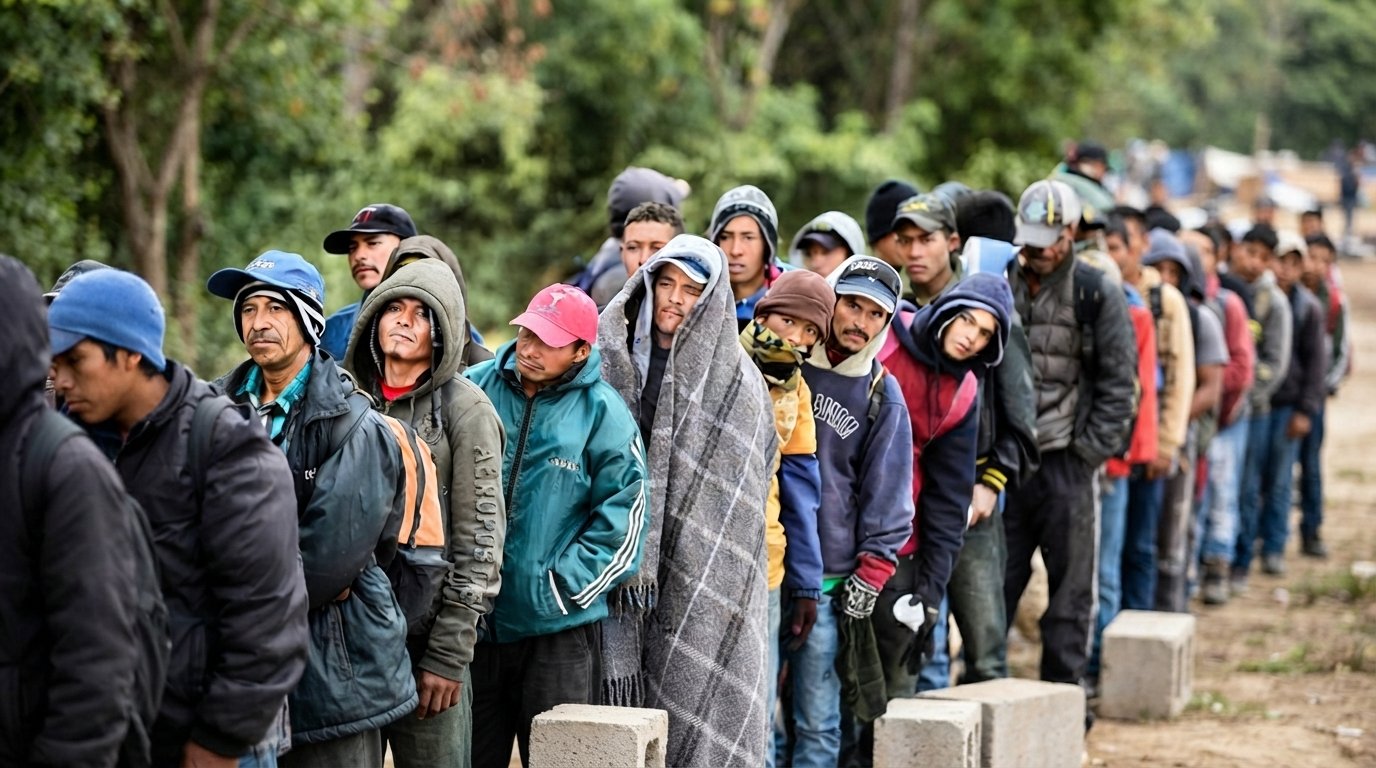
The unauthorized immigrant population in the U.S. hit a record 15.8 million in 2024, a new report finds, driven by border migration, parole programs, and policy shifts.
WEBDESK – SAMAN NOOR – NJNEWSLINE
A Historic Jump Nobody Saw Coming
The number of unauthorized immigrants living in the United States reached its highest point on record by mid-2024, climbing to roughly 15.8 million after sitting steady around 11 million since 2010. That’s according to newly released data from a nonpartisan think tank that tracks migration trends, based on the U.S. Census Bureau’s 2024 American Community Survey. The figures mark a dramatic break from more than a decade of relative stability and they arrive at a moment when immigration policy is once again at the center of national debate.
Why the Numbers Climbed So Fast
The surge traces back primarily to historic levels of migration at the southern border that began in 2021, combined with the Biden administration’s broad use of humanitarian parole and other temporary legal statuses for millions of people. Between 2019 and 2024, the unauthorized immigrant population grew by an estimated 5 million people an average annual increase of about 8%. Researchers attribute much of that growth to an unusually strong post-pandemic U.S. economic recovery, paired with large-scale displacement from countries across the Americas driven by gang violence, political repression, and economic hardship. The single biggest jump came between 2022 and 2023, when 1.6 million new migrants arrived.
The Policy Programs Behind the Growth
A significant share of the 2024 increase stemmed directly from Biden-era policy decisions. In 2023, the administration launched two new humanitarian parole pathways one for Cubans, Haitians, Nicaraguans and Venezuelans, and another for migrants using the CBP One app to schedule asylum appointments. These followed similar programs created in 2021 for Afghans after the U.S. withdrawal, and in 2022 for Ukrainians following Russia’s invasion. Altogether, these humanitarian parole initiatives covered roughly 1.4 million immigrants.
The second Trump administration has since reversed much of that framework ending the humanitarian parole protections, converting the CBP One app into a self-deportation tool, and moving to terminate Temporary Protected Status for hundreds of thousands of immigrants.
A Shifting Map of Where Migrants Come From
While Mexico has long been the largest single source of unauthorized immigrants, its share of that population has fallen sharply from an overwhelming majority in the 1980s and ’90s, to 62% in 2010, down to just 35% as of 2024. Central and South American nations now account for a growing portion of the total, with sharp increases in arrivals from Ecuador, Colombia, and especially Venezuela, alongside steady growth from Guatemala and Honduras.
Under the current administration’s aggressive deportation campaign and its continued practice of revoking previously granted legal status, researchers expect the unauthorized population to decline going forward. Should mass deportation efforts succeed and border crossings remain at their current historically low levels, the report suggests the unauthorized immigrant population could begin shrinking in 2026 and beyond.
A Turning Point in a Longer Story
The record 2024 figure represents the peak of a migration wave that began building in 2021, shaped first by expanded legal pathways and later by a sharp policy reversal. Whether the population continues climbing or starts to fall now depends largely on how aggressively enforcement efforts continue and how few new migrants arrive at the border in the years ahead.
