

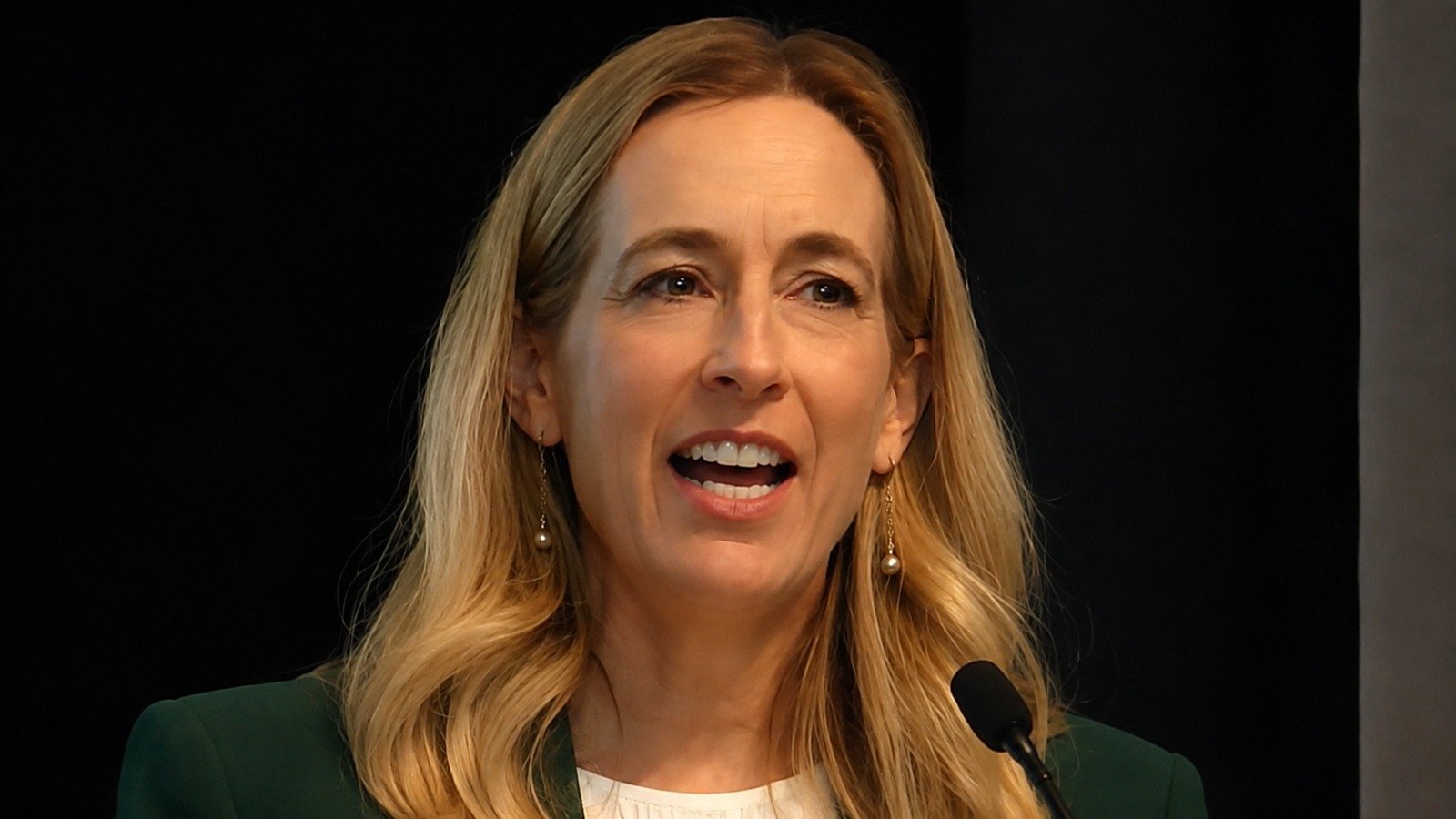
Gov. Mikie Sherrill’s remarks supporting voter ID legislation have revived a long-running debate, giving New Jersey Republicans renewed hope their stalled proposals could finally move forward.
WEBDESK – HAJIRA IRFAN – NJNEWSLINE
A familiar issue is back in the spotlight
A debate that has lingered in New Jersey politics for years is once again gaining momentum after Gov. Mikie Sherrill said she would support a voter ID law if lawmakers approve one.
Her comments, made during a recent television appearance, have encouraged Republican lawmakers who have repeatedly introduced voter ID legislation without success. With the Legislature expected to return to Trenton this fall, GOP leaders say they believe the conversation may finally gain traction.
The renewed attention comes just weeks after the state acknowledged that a software-related error at the New Jersey Motor Vehicle Commission mistakenly added thousands of people who identified themselves as non-U.S. citizens to the voter rolls, putting election security back at the center of political debate.
Republicans say the time for action has arrived
Republican lawmakers argue that requiring identification at polling places is a common-sense safeguard that would strengthen public confidence in elections.
State Sen. Michael Testa said voter ID should be one of the Legislature’s first priorities when lawmakers return to session, adding that residents deserve an open discussion on the issue.
Sen. Parker Space, who sponsors one of the proposals, said he hopes the governor’s position will encourage Democratic leaders to allow the legislation to move after years of inaction. Similar bills have been introduced several times since 2022 but have never received committee hearings.
Assemblyman Gerry Scharffenberger, the Assembly sponsor of companion legislation, said recent developments have made it increasingly difficult to ignore the issue and believes lawmakers will face growing pressure to address it.
Different proposals, shared objective
Although Republicans agree that voters should present identification before casting an in-person ballot, they have proposed slightly different approaches.
One bill would accept documents such as a driver’s license, Real ID or U.S. passport, while also allowing alternatives like utility bills, rental agreements or government-issued mail for voters without photo identification.
Another proposal would require one of four government-issued photo IDs, with supporters arguing that limiting the number of accepted documents would make the process simpler for election workers and more consistent statewide.
Supporters also point out that New Jersey already offers multiple ways to vote, including early voting and vote-by-mail, saying an identification requirement for Election Day voting would serve as an additional layer of security.
Critics say existing safeguards are enough
Voting rights organizations remain strongly opposed to the proposals.
Groups including the American Civil Liberties Union of New Jersey, the New Jersey Institute for Social Justice and the League of Women Voters argue that residents already provide identifying information when registering to vote. They warn that additional identification requirements could create obstacles for some eligible voters, particularly people experiencing homelessness, young adults, older residents and some minority communities.
Advocates also emphasize that the recent MVC registration error involved only a tiny portion of the state’s roughly 6.7 million registered voters and that officials have found no evidence the issue changed the outcome of any election.
Meanwhile, the Sherrill administration has launched an independent investigation, ordered corrections to the voter rolls and announced steps intended to prevent similar registration errors in the future.
Attention now turns to Trenton
Whether voter ID legislation finally advances will depend largely on Democratic leaders in the Legislature, who control which bills receive hearings and votes.
For now, no proposal has been scheduled for consideration. Still, the governor’s comments have changed the political conversation, giving Republicans fresh optimism that a proposal which has repeatedly stalled could receive a serious hearing.
As lawmakers prepare to return to Trenton, the debate is expected to intensify, with supporters arguing voter ID would strengthen election integrity and opponents insisting existing safeguards already protect the voting process. The outcome could shape New Jersey’s election laws for years to come and become one of the state’s defining political battles heading into the next election cycle.
