

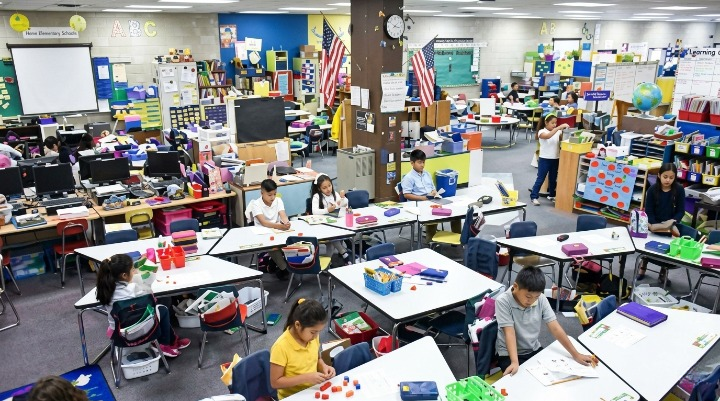
Small New Jersey school districts face growing merger pressure as officials consider cost savings, efficiency, and education reform, sparking debate over community identity and school restructuring plans.
WEBDESK – NJNEWSLINE
Small NJ School Districts Face Growing Pressure to Merge
Small school districts across New Jersey are facing increasing pressure to consider consolidation as state education officials evaluate long-term cost efficiency and structural reforms. A focus on the 50 smallest districts has intensified debate over whether mergers could improve education systems.
The discussion is driven by rising operational costs, administrative duplication, and concerns about whether very small districts can continue functioning efficiently in the long term.
While some policymakers support consolidation, others warn it could weaken local control and community identity.
Why Small Districts Are Under Review
Many of the smallest school districts in New Jersey serve limited student populations but still operate full administrative systems. This creates higher per-student costs compared to larger districts.
Officials are examining whether merging districts could streamline operations, reduce overhead, and improve resource allocation.
The goal is to ensure education funding is used more effectively in classrooms rather than administrative structures.
The 50 Smallest Districts Under Spotlight
A list of 50 of the smallest school districts has drawn attention to the scale of the issue. These districts often have very small student populations, sometimes spread across compact communities.
Education analysts say such districts may face challenges in staffing, budgeting, and offering diverse academic programs.
The list has become a key reference point in ongoing policy discussions about consolidation.
Financial Pressure Driving Reform Debate
One of the strongest arguments for merging districts is financial efficiency. Running multiple small school systems can be expensive due to duplicated administrative roles.
Consolidation could potentially reduce costs and allow more funding to be directed toward teachers, technology, and student programs.
However, restructuring school systems also involves transition costs and complex logistical planning.
Impact on Students and Learning Environment
Supporters of mergers argue that larger districts may offer better academic opportunities, including advanced courses, extracurricular activities, and improved facilities.
Students could benefit from expanded resources and more specialized teachers in merged systems.
However, concerns remain that larger districts may reduce personalized attention and weaken close-knit school communities.
Community Identity and Local Control Concerns
Opponents of consolidation emphasize that small districts often reflect strong community identity and local engagement in education.
Parents and local leaders fear that merging districts could reduce their influence over school decisions.
Schools in small districts are often seen as central to community life, making change emotionally and socially sensitive.
Expat and Family Lifestyle Angle
For families living in New Jersey, school districts are a major factor in housing decisions and long-term planning.
Changes in district boundaries or school structures could influence where families choose to live and how they plan education paths for children.
This makes the merger debate relevant not only for policymakers but also for residents managing household decisions.
What This Means for Residents
If consolidation moves forward, residents may see changes such as new district boundaries, school reassignments, and administrative restructuring.
Families will need to stay informed about potential impacts on school choice, transportation, and enrollment.
The debate could directly affect both current students and future generations.
Future Outlook for School System Changes
The discussion around merging small school districts is expected to continue as officials weigh cost savings against community concerns.
Possible outcomes include voluntary mergers, phased consolidation, or hybrid administrative models.
Any final decision will likely aim to balance efficiency with preserving local identity.
Closing Insight
The debate over small school districts reflects a larger challenge in education policy: balancing financial sustainability with community values and educational quality.
