

WEBDESK – NJNEWSLINE
Wildfire risks are rising across the U.S. state of New Jersey, with experts warning that longer dry periods, higher temperatures, and shifting rainfall patterns are intensifying fire conditions. A recent climate-focused assessment highlights that wildfire seasons are becoming more frequent, more unpredictable, and harder to control than in previous decades.
Officials and climate scientists say the combination of heat, dry vegetation, and strong winds is creating a “perfect fire environment,” even in regions not traditionally known for large-scale wildfires. The concern is not just seasonal—it is becoming a year-round preparedness challenge.
Rising Fire Risk Across Forested Regions
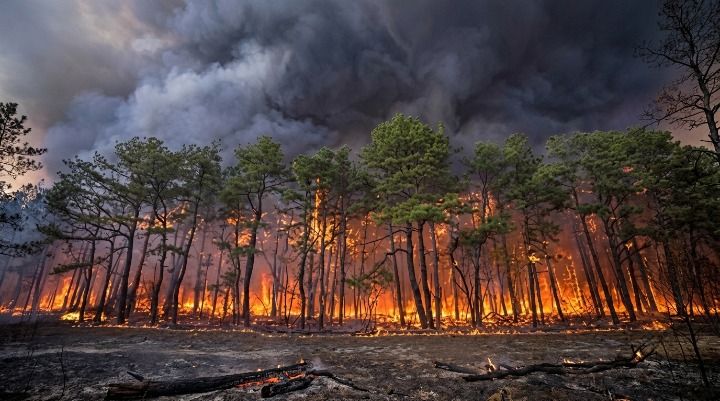
New Jersey’s forested areas, especially in the Pine Barrens region, are particularly vulnerable. These ecosystems naturally contain dry vegetation that can ignite quickly during warm and dry spells.
Fire agencies report that even small ignition sources—such as discarded cigarettes or electrical sparks—can lead to fast-spreading fires when conditions are dry. Over the past few years, wildfire incidents have shown an upward trend, especially during spring and early summer.
Authorities emphasize that the state is not just dealing with more fires, but also faster-moving ones. That increases the difficulty of containment and puts additional pressure on emergency response systems.
Climate Change Driving Longer Fire Seasons
Experts link the growing wildfire risk directly to climate change patterns affecting the region. Rising average temperatures are drying out soil and vegetation earlier in the year, effectively extending the fire season.
In addition, irregular rainfall patterns are creating cycles of heavy rain followed by long dry spells. This leads to rapid vegetation growth followed by dry fuel buildup—ideal conditions for fires to spread quickly.
Scientists note that even short heatwaves can now significantly increase wildfire risk. The changing climate is essentially turning what used to be a seasonal concern into a more continuous threat.
Emergency Response Under Increasing Pressure
Fire departments across New Jersey are investing more in wildfire preparedness, including training, equipment upgrades, and early detection systems. However, officials admit that rising fire frequency is stretching resources.
A major concern is response time in remote forest areas. Even small delays can allow fires to expand rapidly under dry and windy conditions.
Authorities are also increasing public awareness campaigns, urging residents to avoid outdoor burning during high-risk periods and to report smoke sightings immediately. Prevention is now considered just as important as firefighting.
Human Activity Still a Major Trigger
While climate conditions are worsening the situation, human activity remains one of the leading causes of wildfire ignition. Common triggers include unattended campfires, equipment sparks, and improper disposal of flammable materials.
Officials stress that many wildfire incidents could be prevented with basic safety measures. Public education campaigns are focusing on responsible outdoor behavior, especially during dry months.
At the same time, increased development near forested zones is raising the stakes. More homes near wooded areas mean greater risk to property and faster spread into residential zones.
Long-Term Environmental Concerns
Beyond immediate fire damage, experts warn about long-term ecological impacts. Frequent wildfires can disrupt wildlife habitats, degrade soil quality, and reduce forest regeneration capacity.
Air quality is also a growing concern. Smoke from wildfires can spread over large distances, affecting urban areas and increasing respiratory risks for vulnerable populations.
Scientists say that if current climate trends continue, wildfire seasons may become a defining environmental challenge for the region in coming decades.
Conclusion: A Growing Need for Adaptation
The evolving wildfire pattern in New Jersey signals a shift in how the region must prepare for environmental risks. Climate change is not only increasing fire frequency but also changing how, when, and where fires occur.
Experts say the focus must now move toward prevention, climate adaptation, and stronger community awareness to reduce future damage and improve resilience.
