

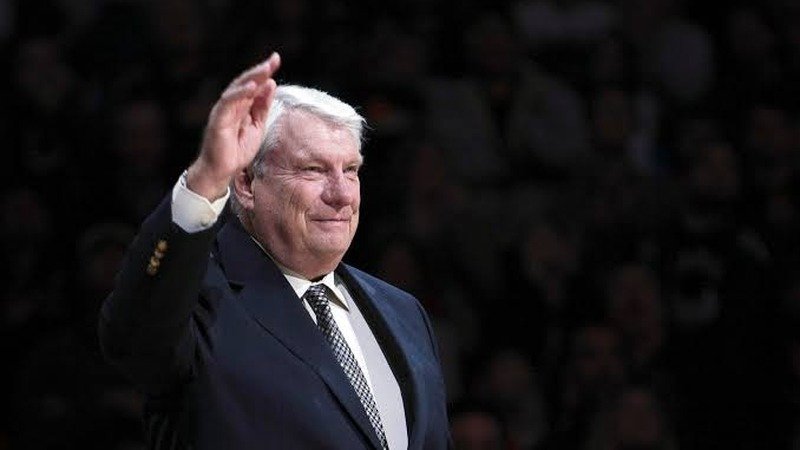
Hall of Fame coach Don Nelson has died at 86, leaving behind five NBA championships, 1,335 coaching wins, innovative strategies, and a lasting influence on modern basketball
WEBDESK – HAJIRA IRFAN – NJNEWSLINE
A Basketball Life Comes to an End
Don Nelson, one of the most influential and unconventional figures in NBA history, has died at 86.
Nelson died peacefully Sunday morning surrounded by his family, according to a statement released by his loved ones. His final days were spent with relatives and friends, who gathered around him, shared memories and celebrated a life that reached far beyond basketball.
For more than five decades, Nelson left his mark on the sport as a player, coach, executive and basketball thinker. His death closes the chapter on a career defined by championships, innovation, personality and an unwavering willingness to challenge conventional ideas.
Five Championships Before Coaching Fame
Nelson first established himself as a player with the Boston Celtics. After entering the NBA in 1962, he eventually joined Boston and became part of one of the league’s greatest dynasties.
During 11 seasons with the Celtics, Nelson won five NBA championships. He played 1,053 regular-season games during his career, averaging 10.3 points and 4.9 rebounds. Boston later retired his No. 19 jersey in 1978, honoring his contribution to the franchise.
But Nelson’s biggest influence was still ahead of him.
The Coach Who Refused to Follow Tradition
After retiring as a player, Nelson quickly moved into coaching. He joined the Milwaukee Bucks as an assistant in 1976 before taking over as head coach just 15 games into the season.
Over 31 seasons, he coached Milwaukee, Golden State, New York and Dallas, eventually finishing with 1,335 regular-season victories. That total made him the NBA’s winningest coach at the time, until Gregg Popovich surpassed him in 2022.
Nelson also won Coach of the Year three times. His unconventional style, later known as “Nellieball,” challenged traditional thinking about positions, lineups and how teams could create advantages.
Building the Future in Dallas
Nelson’s impact was particularly significant in Dallas, where he joined the Mavericks in 1997.
There, he helped reshape the franchise by playing a major role in acquiring future Hall of Famers Dirk Nowitzki and Steve Nash. Nowitzki eventually became one of the greatest players in franchise history, while Nash developed into an elite NBA point guard.
Nelson never won an NBA championship as a head coach, but his influence could not be measured simply by trophies. He guided teams to 18 playoff appearances, coached in two All-Star Games and led the United States to gold at the 1994 FIBA World Championship.
A Legacy That Reached Beyond the Court
Nelson’s connection with Golden State also became an important part of his legacy. The Warriors remembered him as a basketball visionary who saw the game differently and was never afraid to challenge accepted ideas.
He was inducted into the Naismith Memorial Basketball Hall of Fame in 2012, cementing his place among basketball’s most influential figures.
His personality made him just as memorable as his coaching philosophy. Players, executives and fans remembered Nelson for his authenticity, humor, confidence and passion for the game.
His Final Chapter in Maui
After leaving basketball, Nelson settled on a 22-acre farm in Maui, where he became an entrepreneur and cultivated flowers, coffee and cannabis.
His life there also reflected a quieter side of the coach known for doing things his own way. After the devastating Maui wildfires in 2023, Nelson opened his rental properties to families who had lost their homes.
His basketball résumé is filled with numbers that tell an extraordinary story: five championships as a player, 1,335 coaching victories and a Hall of Fame career.
But Nelson’s lasting legacy may be the way he changed how people thought about basketball.
He questioned old rules, trusted unconventional ideas and showed that success could come from seeing the game differently.
The NBA has lost a champion and visionary. But every time creativity, versatility and unconventional thinking reshape the game, a part of Don Nelson’s legacy will remain on the court.
