

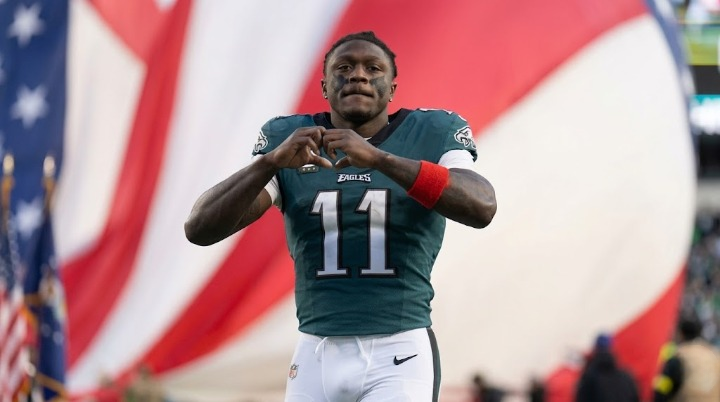
Philadelphia Eagles players react to a major star trade, expressing mixed emotions of disappointment and relief as the team moves forward into a new NFL phase.
WEBDESK – NJNEWSLINE
Major Trade Sends Shockwaves Through Eagles Locker Room
Philadelphia Eagles players are reacting to a major trade involving one of the team’s star players, with emotions ranging from disappointment to relief as the franchise enters a new phase of roster restructuring.
The move has immediately reshaped locker room dynamics, with teammates acknowledging both the emotional impact and the business side of the NFL. While some players admitted the departure is difficult, others emphasized that clarity around the situation brings closure.
The reaction highlights how high-profile trades affect not only team performance but also morale and internal relationships within a professional football squad.
“It Hurts, But It’s Over” — Players Speak Out
Several Eagles players expressed that the trade carried emotional weight, especially for those who shared the field and locker room with the departing star. The phrase “it hurts, but it’s over” reflects a mix of acceptance and resignation.
Players noted that in the NFL, business decisions often outweigh personal bonds. Even strong locker room chemistry cannot always prevent roster changes driven by strategy, salary caps, or long-term planning.
Despite the emotional impact, many players said the clarity of the situation allows the team to refocus on the season ahead without lingering uncertainty.
Locker Room Adjustments and Team Chemistry
Following the trade, the Eagles are now adjusting to changes in leadership structure and on-field chemistry. Losing a key player often requires tactical adjustments, both in gameplay and in communication between teammates.
Coaches are expected to reassess roles and responsibilities, ensuring that the team remains competitive despite the departure. Younger players may now have increased opportunities to step into larger roles.
Team insiders suggest that while the transition is challenging, it could also open the door for new talent development and strategic flexibility.
NFL Business Reality Comes Into Focus
The reaction from Eagles players once again highlights the business-driven nature of the NFL. Trades involving star players are rarely just about performance—they often reflect salary cap considerations, long-term planning, or roster balance strategies.
For players, this reality can be difficult to process, especially when personal relationships are involved. However, most acknowledge that such decisions are part of professional football life.
The Eagles’ situation is another reminder that even high-profile athletes are not immune to sudden organizational changes.
Coaching Staff Focuses on Stability
Eagles coaching staff is now focused on maintaining stability and minimizing disruption following the trade. Preparing the team mentally and tactically for the next phase of the season is a top priority.
Adjustments in play-calling, formations, and personnel usage are expected as the team adapts to the absence of a key contributor. Coaches are also emphasizing communication to ensure smooth transitions.
Despite the setback, the organization remains focused on competitiveness and playoff ambitions.
Fan Reactions and Emotional Response
Fans have also reacted strongly to the trade, with social media filled with mixed emotions. Some supporters expressed frustration over losing a key player, while others acknowledged the business realities of professional sports.
The emotional connection between fans and star athletes adds another layer of complexity to such decisions. For many supporters, the departure represents more than just a roster change—it marks the end of an era.
However, optimism remains as fans look forward to how the team will rebuild and move forward.
What This Means for the Eagles Moving Forward
Looking ahead, the Eagles are expected to rely on a combination of experienced players and emerging talent to fill the gap. The success of this transition will depend heavily on coaching strategy and player adaptability.
While the trade may initially disrupt team rhythm, it also creates opportunities for restructuring and long-term planning. NFL franchises often undergo such phases as part of competitive evolution.
The coming weeks will be crucial in determining how quickly the Eagles can stabilize and regain momentum.
Conclusion
The Eagles’ locker room reaction to the star player trade reflects a mix of emotion, professionalism, and acceptance. While the departure is difficult for many, the team is now focused on moving forward.
As the NFL season approaches key stages, the Eagles will aim to turn this transition into an opportunity for growth, cohesion, and renewed competitiveness.
