
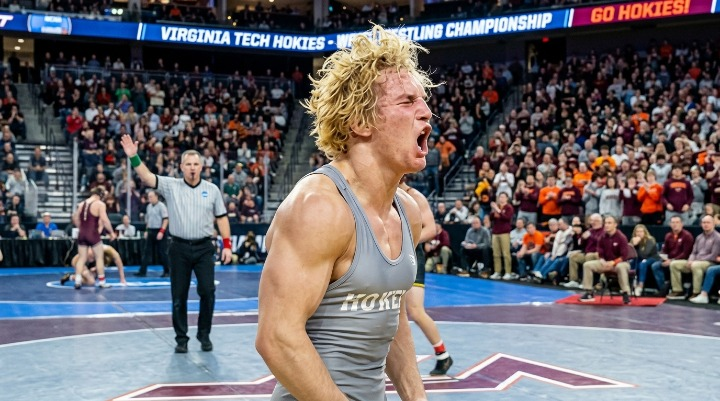
A former NJ wrestling champion has been stripped of his NCAA national title due to a violation, sparking debate over rules, fairness, and college sports integrity.
WEBDESK – NJNEWSLINE
NCAA Title Stripped in Major Wrestling Controversy
A former two-time New Jersey high school wrestling champion has been stripped of his NCAA national title following a confirmed rules violation, triggering widespread discussion across the college wrestling community. The decision marks a significant disciplinary action in the sport.
Officials confirmed that the athlete’s title was revoked after a review determined that a violation of competition or eligibility rules had occurred. The ruling has drawn attention from fans, coaches, and sports analysts nationwide.
The incident has raised questions about compliance standards and enforcement within collegiate wrestling.
What Led to the Title Stripping Decision
According to officials involved in the review process, the violation was serious enough to impact the athlete’s eligibility status. While specific details remain limited, governing bodies concluded that the rules breach warranted removal of the national title.
The NCAA has strict guidelines governing athlete eligibility, conduct, and competition fairness. Any violation of these rules can result in penalties ranging from suspension to disqualification or title removal.
In this case, the final ruling resulted in one of the most severe outcomes in college wrestling—stripping of a national championship title.
From High School Star to National-Level Athlete
The athlete had previously gained recognition as a dominant force in New Jersey high school wrestling, winning two state-level championships. His transition to NCAA competition was closely followed by fans and analysts.
His early success positioned him as one of the promising names in collegiate wrestling, making the recent ruling even more impactful in the sports community.
The case has now shifted focus from athletic achievement to compliance and rule enforcement in competitive sports.
Reaction Across Wrestling Community
The decision has sparked strong reactions within the wrestling community. Coaches and former athletes have expressed mixed views, with some supporting strict enforcement of rules while others question the transparency of the process.
Fans have also taken to social media to debate the fairness of the ruling. While some argue that rules must apply equally to all athletes, others believe clearer communication of violations is needed.
The controversy continues to generate discussion about accountability in college athletics.
Impact on Collegiate Wrestling Standards
The case highlights the importance of maintaining strict eligibility and conduct standards in NCAA sports. Governing bodies emphasize that fairness and integrity are central to competition rules.
This incident may lead to further review of enforcement procedures to ensure consistency across programs and athletes.
Sports analysts suggest that such high-profile cases often influence future policy updates and compliance monitoring systems.
Expat and Student-Athlete Angle
For international student-athletes competing in the United States, the case serves as a reminder of the strict regulatory environment in NCAA sports. Eligibility rules apply equally regardless of background or prior achievements.
Many athletes rely on clear compliance to maintain scholarships and competitive status. Violations, even unintentional, can have serious career consequences.
This reinforces the importance of understanding institutional regulations before and during participation in collegiate sports programs.
Money and Career Impact Angle
Stripping a national title can significantly affect an athlete’s future opportunities, including sponsorships, endorsements, and professional advancement.
In college sports, titles often play a key role in building reputation and career trajectory. Losing such recognition may impact visibility and recruitment prospects.
Institutions may also face reputational considerations when athletes under their programs are involved in compliance violations.
What This Means for College Sports Integrity
This case reinforces the NCAA’s commitment to enforcing rules strictly to maintain fair competition. It sends a clear message that violations, regardless of athlete status, will face consequences.
For future athletes, this may lead to increased scrutiny and stronger compliance checks before competitions.
It also highlights the ongoing challenge of balancing competitive pressure with regulatory adherence in high-performance sports.
Future Outlook
The decision is expected to remain a reference point in discussions around NCAA enforcement policies. Further clarification or appeals may emerge depending on procedural developments.
Meanwhile, governing bodies are likely to continue emphasizing transparency and rule education for athletes and coaching staff.
The case may also influence future reforms in eligibility monitoring systems.
Closing Insight
The stripping of a national title underscores a central truth in competitive sports—achievements are only as strong as the rules that govern them, and compliance remains essential at every level.
