

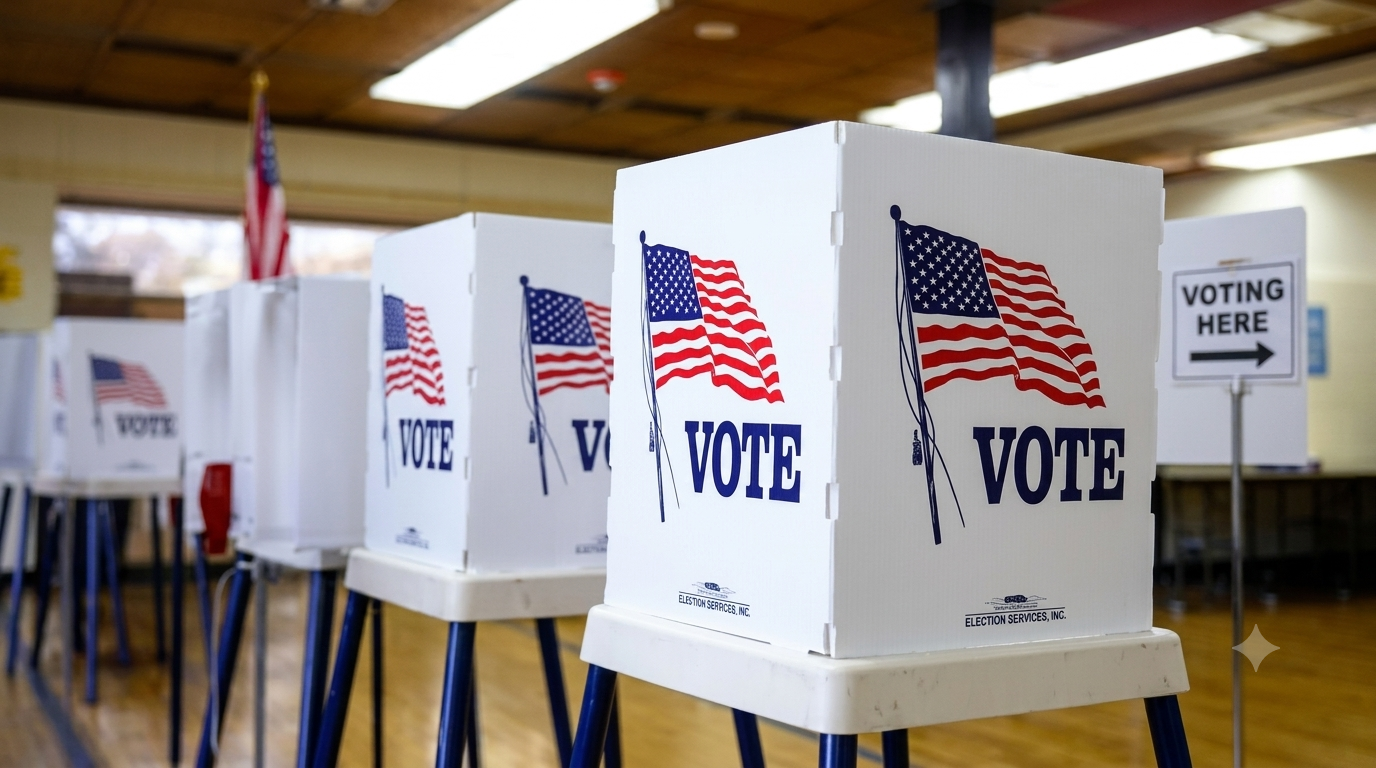
A New Jersey voter-roll review claims hundreds of non-citizens were registered voters, reigniting debate over election integrity, verification safeguards, and the accuracy of voter registration systems.
WEBDESK – NJNEWSLINE
A review of voter registration records in New Jersey has triggered renewed debate over election integrity after a Republican-led task force claimed it found hundreds of non-citizens listed on voter rolls, with some allegedly casting ballots over multiple election cycles.
The findings have prompted calls for stronger verification safeguards, while election officials stress that allegations of voter fraud are investigated whenever they come to the attention of authorities.
Review Uncovers Alleged Registration Issues
The controversy centers on an election integrity review launched by the New Jersey Republican Party in cooperation with the Republican National Committee.
According to the task force, public records obtained from counties across the state showed hundreds of non-citizens appearing on voter registration lists. The group also claimed to have documented at least 30 cases involving alleged illegal voting.
Party officials described the findings as a significant concern and said the investigation is still in its early stages.
More records from additional counties are expected to be reviewed in the coming weeks.
Questions Raised About Registration Systems
A major focus of the review involves the voter registration process connected to the state’s motor vehicle system.
The task force argues that individuals who are legally allowed to obtain driver’s licenses but are not eligible to vote may sometimes be added to voter rolls because of weaknesses in verification procedures.
Investigators claim some cases were only discovered because individuals later informed election authorities that they were not eligible voters.
According to the review, many of those cases surfaced during immigration or naturalization processes.
Election Officials Respond
State election officials have emphasized that any allegation involving election fraud is referred to appropriate authorities for review and investigation.
Officials also stated that they remain committed to administering elections fairly, accurately, and in accordance with state law.
At this stage, the allegations remain under review and no statewide determination has been announced regarding the full scope of the claims.
Authorities have not released final findings from any comprehensive investigation into the voter-roll allegations.
Previous Cases Add to Debate
The discussion comes amid several recent election-related prosecutions and investigations in New Jersey.
Federal prosecutors last month announced charges against four non-citizens accused of illegally voting in federal elections and later making false statements during citizenship applications.
Separately, a former local political candidate pleaded guilty in a case involving forged voter registration applications connected to a previous election cycle.
While those cases involved specific individuals rather than statewide election outcomes, they have fueled broader discussions about election security and oversight.
Supporters of stronger safeguards argue that such incidents demonstrate the need for tighter verification systems.
Why the Issue Matters
Election integrity remains one of the most closely watched political issues in the United States.
Both major political parties generally agree that voter rolls should be accurate, though they often disagree on the scale of existing problems and the solutions required.
Advocates of stricter controls say voter registration systems should include stronger citizenship verification.
Others argue that safeguards already exist and caution against drawing broad conclusions before investigations are completed.
Growing Focus on Verification Technology
The latest claims are also renewing attention on how technology is used to manage voter databases.
Experts note that modern election systems process millions of records, making accuracy and regular updates essential.
Improved data-sharing between government agencies and more advanced verification tools are frequently discussed as possible ways to reduce registration errors.
The debate is likely to continue as election officials, lawmakers, and advocacy groups examine potential reforms.
What Happens Next?
The task force says additional county records are still being analyzed, suggesting more findings could emerge.
State authorities have indicated that any credible allegations will continue to be reviewed through established investigative channels.
The outcome of those reviews may influence future discussions about voter registration procedures, election safeguards, and verification requirements across the state.
For now, the issue remains under scrutiny as both political leaders and election officials face growing pressure to address concerns while maintaining public confidence in the voting process.
Closing Insight
The New Jersey voter-roll review has intensified an already heated national conversation about election integrity. Whether the allegations lead to policy changes or broader reforms, the debate is likely to remain a major political issue heading into future elections.
