
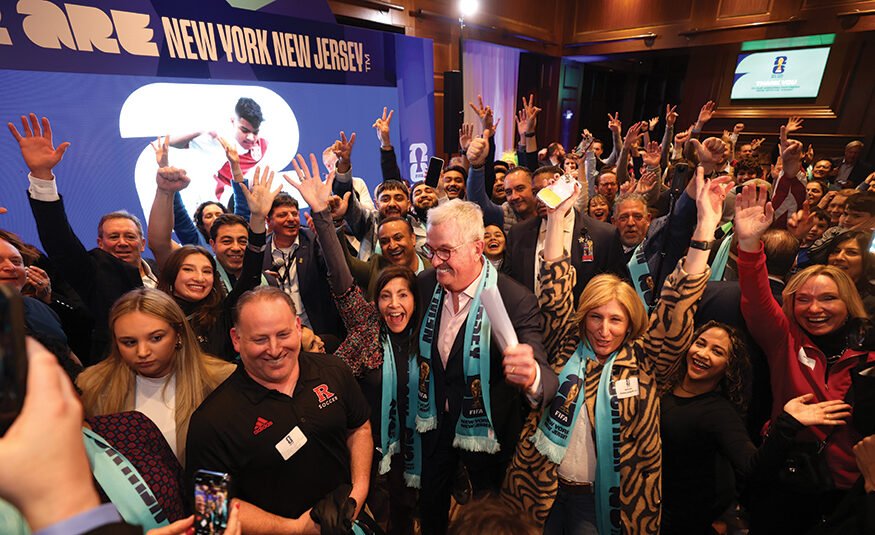
A growing rivalry between New York and New Jersey over credit, costs, and control of the 2026 FIFA World Cup has exposed political tensions as both states battle over who truly hosts the global tournament.
WEBDESK – NJNEWSLINE
A long-running rivalry between New York and New Jersey has intensified ahead of the 2026 FIFA World Cup, with political leaders on both sides of the Hudson River clashing over hosting rights, transportation costs, and economic benefits tied to the tournament.
The dispute reignited after New York City Mayor-elect Zohran Mamdani described New York as the host city for eight World Cup matches. New Jersey officials quickly objected, noting the games will actually be played at the stadium in East Rutherford.
“With all due respect to Mayor-elect Mamdani, maybe he doesn’t know where the games are going to be played,” New Jersey Gov. Mikie Sherrill responded. “Because that’s going to be in New Jersey.”
The venue, commonly known as MetLife Stadium, will officially operate under the temporary FIFA-approved title “New York-New Jersey Stadium” during the tournament due to FIFA-imposed sponsorship rules.
The disagreement, however, extends far beyond naming rights.
New Jersey officials have introduced a series of financial measures to shift the cost of hosting the World Cup away from state taxpayers and onto visitors. The state plans to impose a temporary 3% sales tax increase in the Meadowlands district, hotel surcharges, and additional ride-share fees during the five-week tournament period.
Officials also announced that round-trip NJ Transit fares from Manhattan to the stadium could reach $98 during match days, significantly higher than the normal fare of $12.90. Earlier plans had proposed a fare as high as $150 before sponsorship support reduced the cost.
The transportation issue has sparked backlash from fans and visitors, especially international supporters expected to attend the tournament.
Meanwhile, New York Gov. Kathy Hochul has promoted fan festivals and transportation plans across New York, declaring, “New York isn’t just hosting the World Cup, New York is the World Cup.”
Her statement triggered criticism online, with many pointing out that none of the matches will actually take place inside New York State.
Tensions have also emerged over transportation funding. New Jersey officials argue that the state is shouldering most of the burden of hosting, despite New York receiving major tourism and economic benefits tied to the event.
Local authorities in East Rutherford say the tournament will place enormous pressure on public services, police operations, and transportation infrastructure. FIFA regulations banning fan tailgating and restricting pedestrian access around the stadium have further complicated planning efforts.
Officials estimate expanded train and bus operations alone could cost New Jersey around $48 million.
The rivalry has also revived broader frustrations between the neighboring states over bridge tolls, congestion pricing, and regional economic competition.
Despite the disputes, officials on both sides agree on one thing: FIFA’s demands and soaring ticket prices have made the tournament difficult even for local leaders to afford.
Several politicians interviewed admitted they likely would not attend matches because of the high costs.
One New Jersey official joked, “No, God no. I’m still on a government salary.”
The 2026 FIFA World Cup is expected to be one of the largest sporting events in North American history, with matches spread across the United States, Canada, and Mexico. However, as preparations intensify, the New York-New Jersey rivalry is increasingly becoming part of the tournament’s storyline itself.
