

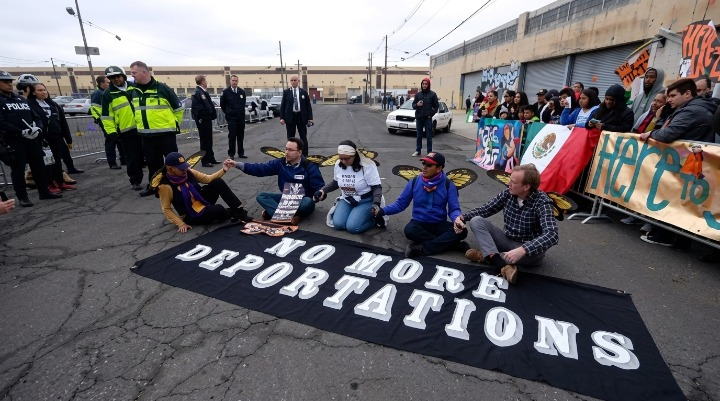
New Jersey faces growing political and legal battles over deportation policies as officials, advocates, and communities push back against enforcement actions, sparking statewide debate on immigration rights and safety.
WEBDESK – NJNEWSLINE
State Pushes Back as Deportation Debate Intensifies
New Jersey has become a major focal point in the national immigration debate as state officials, legal groups, and advocacy organizations step up efforts aimed at resisting or limiting deportation actions. The push has intensified amid rising enforcement activity and growing concern over how immigration policies affect families and communities.
At the center of the issue is a widening divide between federal immigration enforcement priorities and state-level policies that aim to reduce local cooperation with deportation operations. Supporters argue the measures are designed to protect public trust, while critics say they interfere with federal law enforcement.
The result is a complex legal and political battle that continues to evolve across courts, communities, and state institutions.
Legal Aid Expansion and Court Challenges Grow
One of the key developments is the expansion of legal aid programs designed to help individuals facing deportation proceedings. These programs aim to ensure access to legal representation for immigrants who might otherwise navigate the system alone.
Advocacy groups have also increased efforts to challenge deportation orders in court, focusing on due process concerns and family separation risks. Legal filings often emphasize humanitarian grounds and long-term community ties.
State-level discussions have also included funding support for nonprofit organizations that provide immigration legal services. These efforts have become a central part of the broader response strategy.
Policy Tensions Between State and Federal Authorities
A major source of conflict stems from differing approaches to immigration enforcement. Federal authorities continue to prioritize deportation of individuals who meet certain enforcement criteria, while state-level directives in New Jersey generally limit cooperation in non-criminal immigration matters.
Local law enforcement agencies have been encouraged in many cases to focus on public safety rather than immigration status. This approach has sparked ongoing debate about whether such policies enhance community trust or weaken enforcement effectiveness.
The tension between jurisdictions continues to play out in both legal interpretations and political messaging.
Community Impact and Fear in Immigrant Households
Immigrant communities across the state report increased anxiety as deportation enforcement actions continue. Families often express concern about separation, employment instability, and uncertainty about legal status.
Community organizations have stepped in to provide education, emergency planning resources, and counseling services. These groups aim to help residents understand their rights and prepare for potential legal challenges.
In many neighborhoods, fear of enforcement has also been linked to reduced willingness to report crimes or interact with public institutions, according to advocates.
Political Divide Deepens Over Immigration Approach
The issue has also become deeply political, with lawmakers divided over the best approach to immigration enforcement. Supporters of stricter policies argue that uniform enforcement of federal law is necessary for national security and legal consistency.
Opponents counter that aggressive deportation efforts harm families and local economies, and that state-level protections are necessary to balance enforcement with humanitarian concerns.
This divide has led to repeated legislative debates, public hearings, and competing policy proposals.
Legal Questions Over State Authority and Enforcement Limits
A key unresolved issue is the extent of state authority in shaping how immigration laws are enforced locally. Legal experts point out that while immigration enforcement is primarily a federal responsibility, states retain control over many aspects of local law enforcement cooperation.
This creates a legal gray area where policies can vary significantly from one state to another. In New Jersey, this has resulted in a framework that emphasizes limited cooperation in certain deportation-related activities.
Courts may ultimately play a critical role in determining how far these policies can go without conflicting with federal authority.
What Happens Next in the Deportation Debate?
Looking ahead, the debate over deportation policies in New Jersey is expected to continue shaping legal and political discussions. Ongoing court cases, policy reviews, and advocacy campaigns suggest that no immediate resolution is in sight.
Immigration experts believe the situation may evolve further depending on federal enforcement priorities and future state legislative decisions.
For now, the state remains at the center of a broader national conversation about immigration enforcement, legal rights, and the balance between security and humanitarian concerns.
Bottom Line
New Jersey’s fight over deportation policies highlights a growing national divide between enforcement priorities and state-level protections. The issue continues to spark legal battles, political debate, and community-level concern with no clear resolution yet in sight.
